How Grand Rapids homes flood
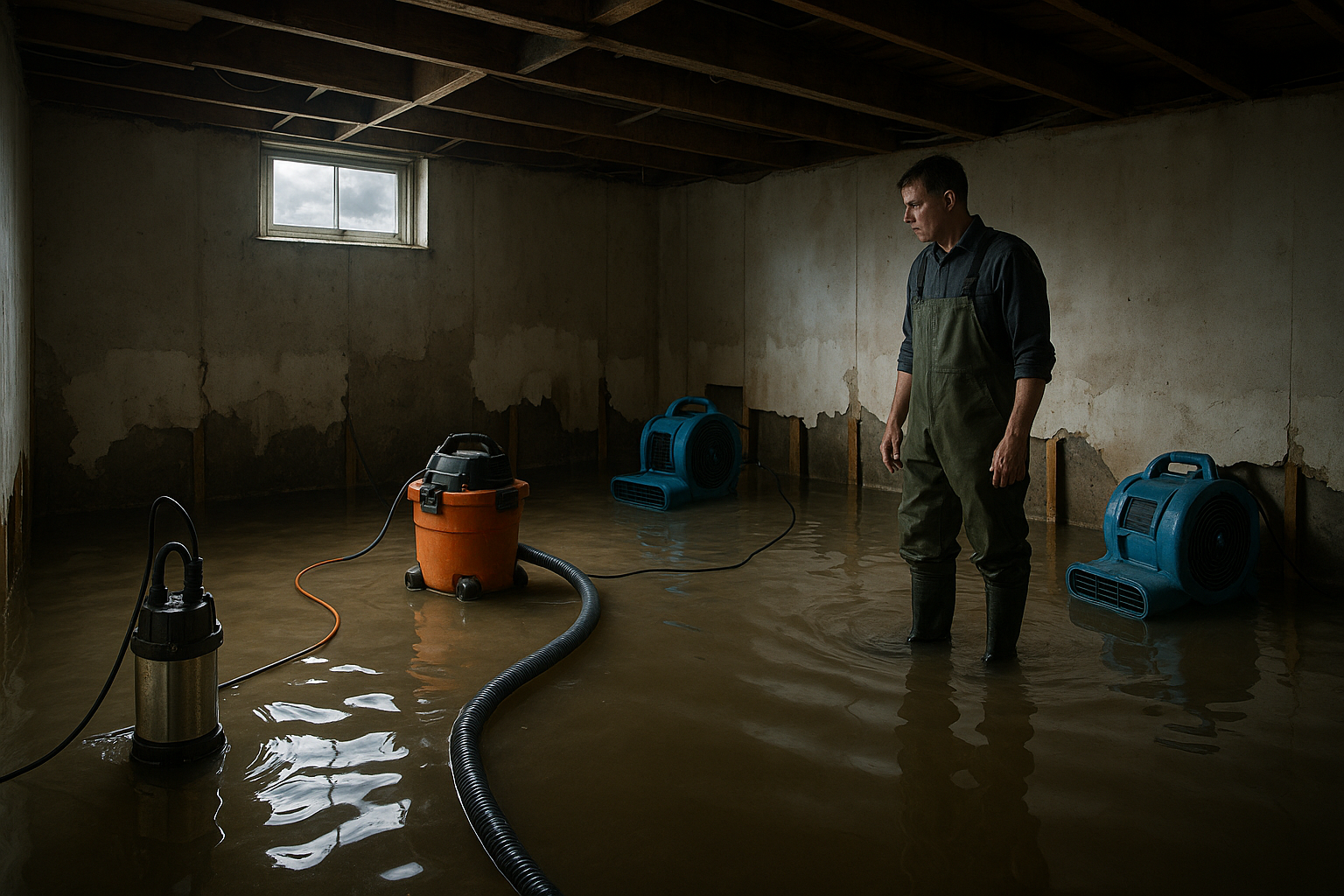
This region has a long, well-documented relationship with water. The Grand River has overrun its banks repeatedly — the great flood of 1904, again famously in 2013 when the river crested near 22 feet, and as recently as the spring of 2026 when sustained rain pushed it past flood stage and put water in roughly a hundred Comstock Park–area basements. But you don't need the river to flood a basement here. The far more common culprits are a sump pump that fails or loses power during a storm, a heavy rain or rapid spring thaw overwhelming the drain tile, a sewer or storm-drain backup pushing water up through the floor drain, or a frozen pipe that bursts in a January cold snap.
Whatever the source, the pattern is the same: water collects in the lowest level, soaks into drywall, carpet, pad, insulation, and the bottom of framing, and — if it isn't dried fast and completely — starts growing mold within 24 to 48 hours. The surface can look dry while the wall cavity and subfloor stay saturated for days.
The first 24–48 hours matter most
Mold doesn't need long. Given wet cellulose and room-temperature air, spores can germinate in a day or two. That's why professional water-damage response moves fast: extract standing water, pull out unsalvageable wet materials before they become a spore reservoir, and set commercial air movers and dehumidifiers to drive moisture out of the structure. The goal is to get framing and subfloor back to a verified dry moisture content before mold ever establishes — turning a potential remediation into a contained cleanup.
Know your water category. Clean water from a supply line is the best case. A sump or rainwater backup is “gray” water. A sewer backup is “black” water — contaminated and a health hazard — and demands more aggressive removal and disinfection. Be honest with your pro about the source; it changes what can be saved.
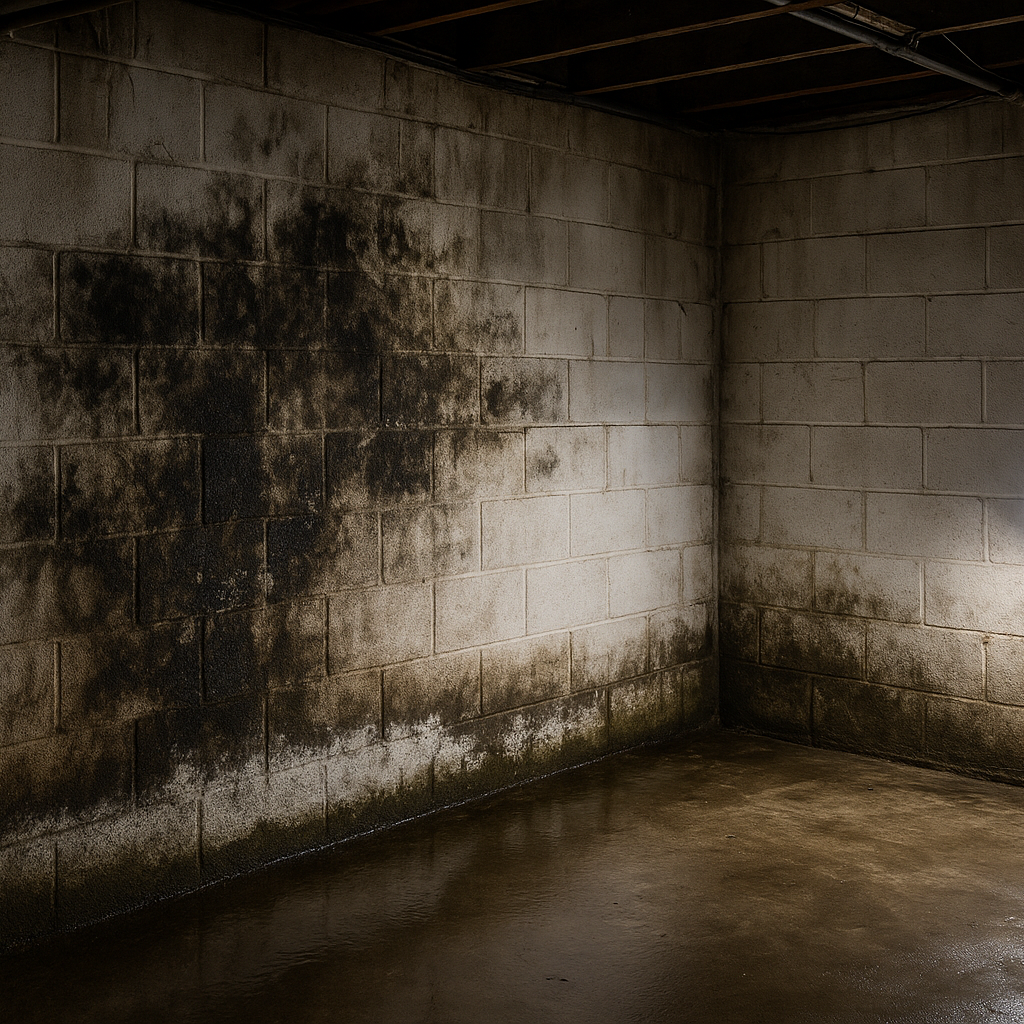
Standing water reached the drywall and carpet pad.
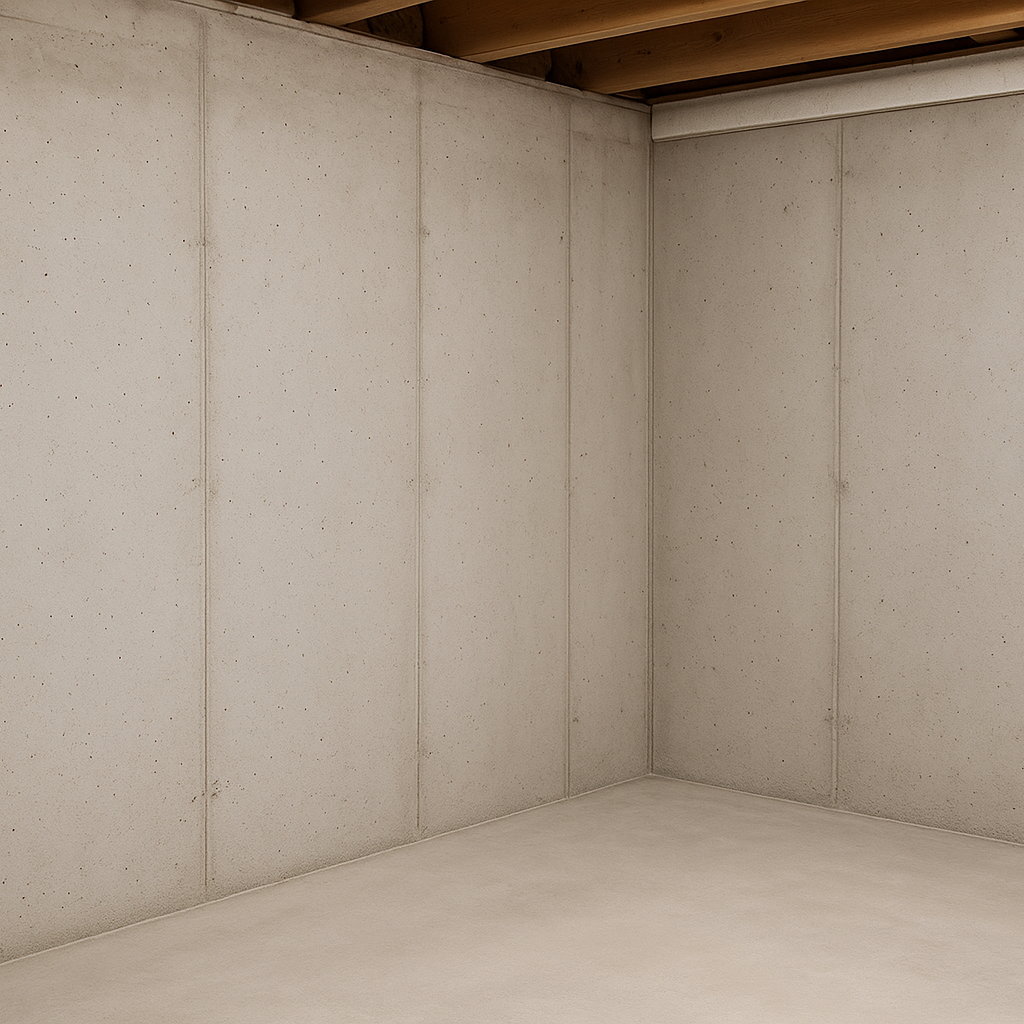
Extracted, dried to target, and remediated.
The water-damage and mold process
- Extract and assess. Remove standing water and classify the water category; document for insurance.
- Remove wet, unsalvageable materials. Carpet pad, soaked drywall (often cut to a line above the waterline), and wet insulation come out before they grow mold.
- Dry aggressively. Air movers and dehumidifiers run until framing, slab, and subfloor hit measured dry targets — monitored daily, not guessed.
- Clean and disinfect. Especially critical for sewer backups; surfaces are cleaned and treated with appropriate antimicrobials.
- Remediate any mold that started. If drying was delayed and growth began, the area is contained and remediated like any mold job.
- Restore. Rebuild with an eye toward resilience — and toward preventing the next flood.
Stopping the next flood
After a flood, the smartest money often goes into prevention: a reliable, properly sized sump pump with a battery or water-powered backup for when the power fails (which it often does in the same storm), a backwater valve to stop sewer backups, improved grading and downspout extensions, and in some homes interior drain tile. For river-adjacent properties in places like the West Side and Comstock Park, it's also worth understanding your flood-zone status and whether NFIP flood insurance makes sense — our Michigan insurance guide covers the basics.
Already flooded? Move now
If water is in your home right now, the priority is fast, complete drying — every hour matters for whether materials can be saved and whether mold takes hold. Our guide on what to do after basement or river flooding walks through the immediate steps. Then tell us what happened and we'll connect you with a licensed local pro who can mobilize quickly. If it's an active emergency, call (616) 816-2703 and we'll help get someone moving.
Why the first 48 hours decide everything
When the Grand River backs water into a basement — as it has in low-lying spots from the West Side to Comstock Park — mold isn't an if, it's a clock. Spores begin colonizing wet drywall, carpet, and framing within roughly 24 to 48 hours. The single biggest factor in how much you lose is how fast the water comes out and the drying begins. That's why flood response and mold prevention are really the same job: extract the water, pull out unsalvageable porous materials before they grow, and get commercial drying equipment running while the structure is still recoverable.
Clean water, grey water, black water
Not all flood water is equal, and the category drives what can be saved. Clean water from a broken supply line is the most forgiving. Grey water from an appliance or a backed-up drain carries contaminants and demands more aggressive removal. Black water — river floodwater or sewage backup, the kind West Michigan basements see in a thaw or a heavy spring rain — is contaminated with bacteria and debris, which means soaked porous materials generally come out rather than getting dried in place, and surfaces get disinfected, not just dried. A qualified crew sorts this correctly so you're not living above contamination you can't see.
Documenting the loss for insurance
Before anything gets thrown out, photograph everything — standing water, soaked materials, the waterline on the walls. Standard homeowner policies often exclude flood from rising water, while a separate flood policy or a sewer-and-drain-backup endorsement may cover it, so the cause matters as much as the damage. The remediation companies we match you with document moisture readings and the scope of removed materials, which gives you the paper trail an adjuster needs. We're a referral service, not your insurer, but getting a thorough, well-documented response started quickly protects both your home and your claim.