
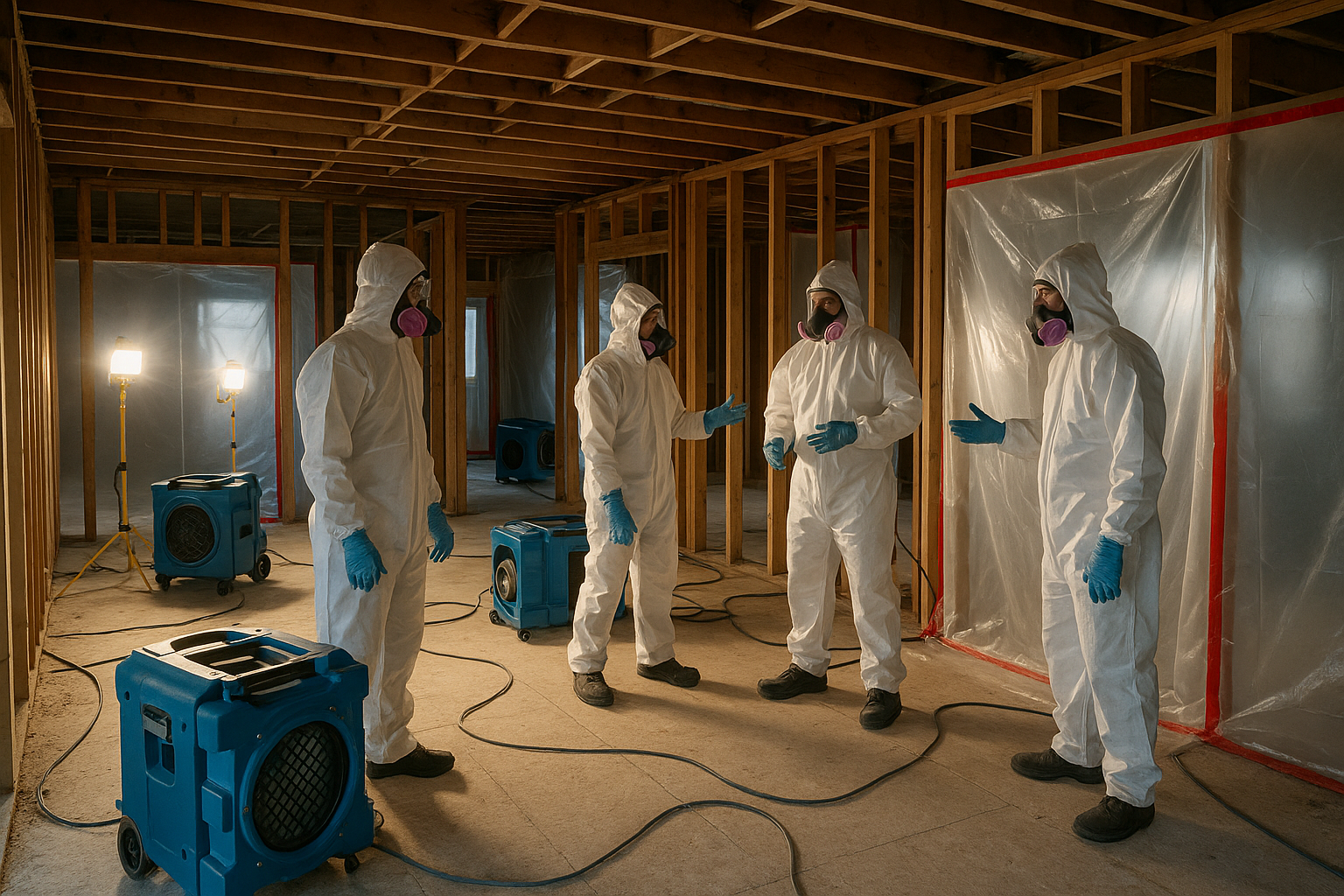
When mold becomes a whole-home problem
Most mold is local — one wet wall, one bad bathroom. It becomes a whole-home issue when moisture has had time and a path to move through the structure. In Grand Rapids that usually looks like one of a few stories: a foundation or plumbing leak that quietly fed mold for years before anyone noticed; a basement flood that got pumped out but never properly dried, so the framing and subfloor stayed wet; a roof or ice-dam leak that traveled down inside the walls; or — very common in this market — a vacant, foreclosed, or estate home that sat closed up with the heat off through a humid West Michigan summer, letting mold bloom on walls, ceilings, and contents throughout.
The defining feature isn't the square footage of mold you can see — it's that the moisture has affected multiple areas and often the structure itself. That changes the job from a single removal into a phased project that has to be planned and sequenced.
It starts with a full assessment
You can't quote or scope a whole-home job from the doorway. A proper project begins with a comprehensive inspection: moisture mapping across every level, infrared scanning of walls and ceilings, air sampling in multiple rooms against an outdoor baseline, and identification of every moisture source feeding the growth. That produces a room-by-room scope and a sequence — what gets contained and remediated first, what moisture problems must be fixed, and how the home is verified clean at the end.
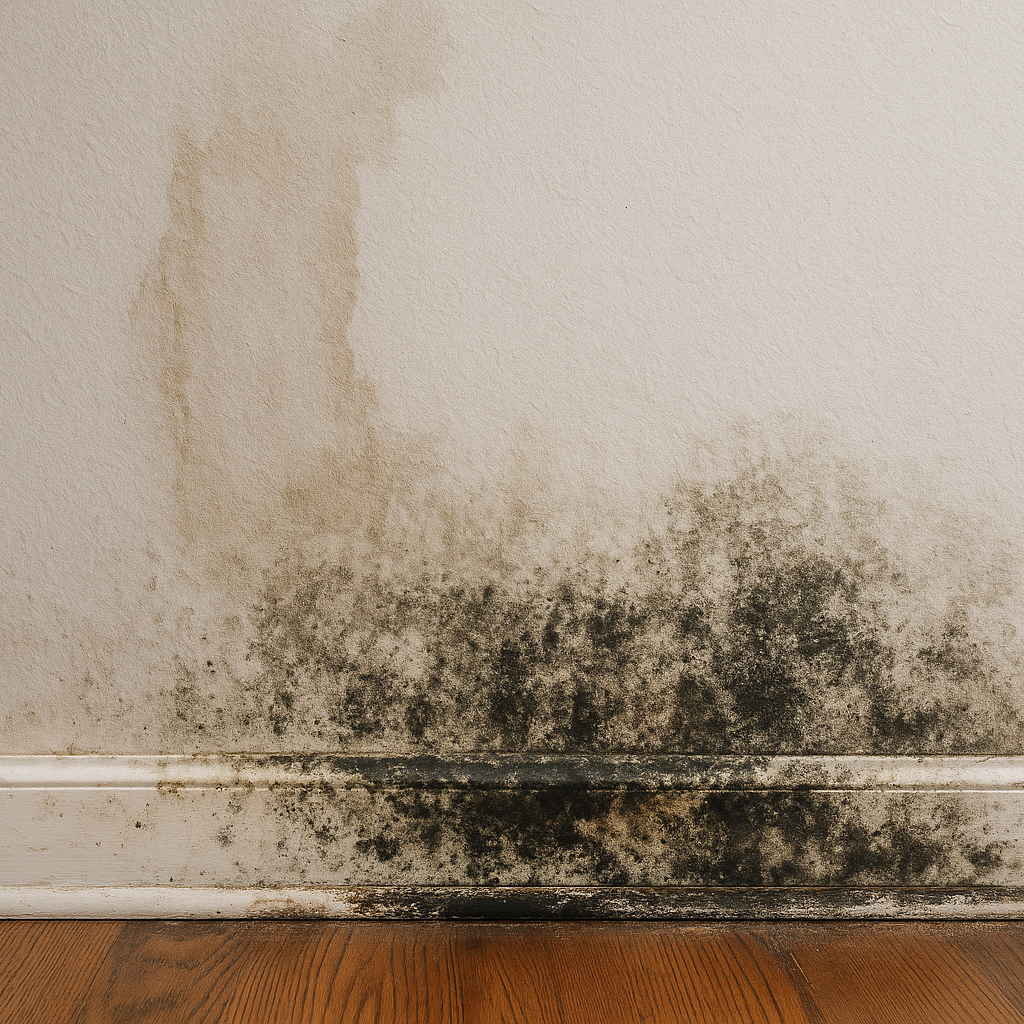
Widespread growth in a closed-up vacant home.

Remediated, dried, and restored throughout.
How a whole-home project runs
- Map everything first. Full moisture and air assessment, every source identified, a written room-by-room scope.
- Phase the work. Contain and remediate area by area so the rest of the home stays protected; HVAC is isolated so ducts don't spread spores.
- Fix every moisture source. Foundation, plumbing, roof, ventilation, humidity — all of it, because a single missed leak restarts the cycle.
- Remediate structure and contents. Remove unsalvageable porous materials; HEPA-clean, treat, and dry framing; clean or dispose of affected belongings per protocol.
- Dry and verify. Monitor moisture to dry targets, then clear each area — ideally with independent post-remediation testing.
- Restore. Rebuild with resilient materials and the moisture-control upgrades that keep it from recurring.
Buying a foreclosure or estate property? A closed-up house that sat through a Michigan summer with no climate control is a classic whole-home mold scenario. Get it inspected before closing, not after — the scope of remediation can meaningfully change what the property is worth.
What whole-home remediation costs
These are the largest mold projects, and the range is wide because the scope is. Multi-room remediation with structural drying, source repairs, and rebuild commonly runs into the five figures, and extensive structural involvement or a full vacant-home restoration can climb from there. The honest way to price it is from a detailed, itemized scope after a real assessment — not a flat per-foot guess. Our estimator and cost guide help you understand the components and read a quote critically.
One coordinated project, done once
The risk with big mold jobs is doing them piecemeal — fixing one room while the source in another keeps the problem alive. A coordinated whole-home approach maps it all, fixes every moisture source, and verifies the result, so you're not back at it next year. Tell us what you're dealing with — an old leak, a flood, a vacant property — and we'll connect you with a licensed Grand Rapids pro equipped for projects at this scale, for a free assessment and quote.
When the problem is the whole house, not one room
Sometimes mold isn't a basement issue or a bathroom issue — it's a building issue. Homes that have sat vacant with the heat off, properties bought at auction, houses that flooded and were never properly dried, and older Grand Rapids homes with chronic humidity can develop mold across multiple levels at once. In those cases, treating one room at a time just chases the problem around the house. A whole-home approach starts with an assessment that maps every affected area and, just as importantly, the moisture sources connecting them.
A coordinated, sequenced project
Whole-home remediation is a sequenced project, not a single visit. The crew typically works from the top of the moisture chain down — correcting roof, attic, and envelope issues, then the living levels, then the basement and crawl space — so they're not re-contaminating areas they've already cleaned. Containment and negative air pressure isolate active work zones from the rest of the house. Whole-house dehumidification and air scrubbing run throughout. Because the scope is large, a good contractor stages the work, keeps the home livable where possible, and gives you a clear timeline and a written scope rather than an open-ended teardown.
Fixing the conditions that let it spread
The reason mold went whole-house is almost always a systemic moisture problem, and that's what has to change for the fix to hold. That might mean correcting drainage and grading around the entire foundation, sealing and conditioning the crawl space, fixing attic ventilation, balancing humidity with proper dehumidification, or addressing an HVAC system that's been distributing spores through every room. Clearance testing after the work confirms the air is clean across the home — and the moisture corrections are what keep it that way. It's a bigger investment than a single-room job, but for a house this is the difference between recovering it and fighting it forever.