Commercial mold is a different problem
Residential mold affects a family; commercial mold affects everyone who walks through the door. The stakes are operational and legal as much as structural. A landlord has habitability obligations to tenants. A restaurant or food business has health-code exposure. A medical or dental practice has patients with real vulnerability. An office has staff who may file complaints about air quality. And almost every commercial property has a lease, an insurer, and a liability picture that a botched or undocumented remediation can make worse.
Grand Rapids has the building stock to match: historic brick-and-timber commercial buildings downtown and along the river corridors, where old roofs, masonry, and basements collect moisture; mid-century retail and office space; multi-unit rentals throughout the city's neighborhoods; and newer suburban commercial in Kentwood, Wyoming, and Cascade. Each has its own moisture profile, and each needs work scheduled around the reality that the building has to keep functioning.
What commercial clients actually need
- Minimal downtime. Work phased, sectioned off, and often scheduled after-hours or overnight so the business keeps running.
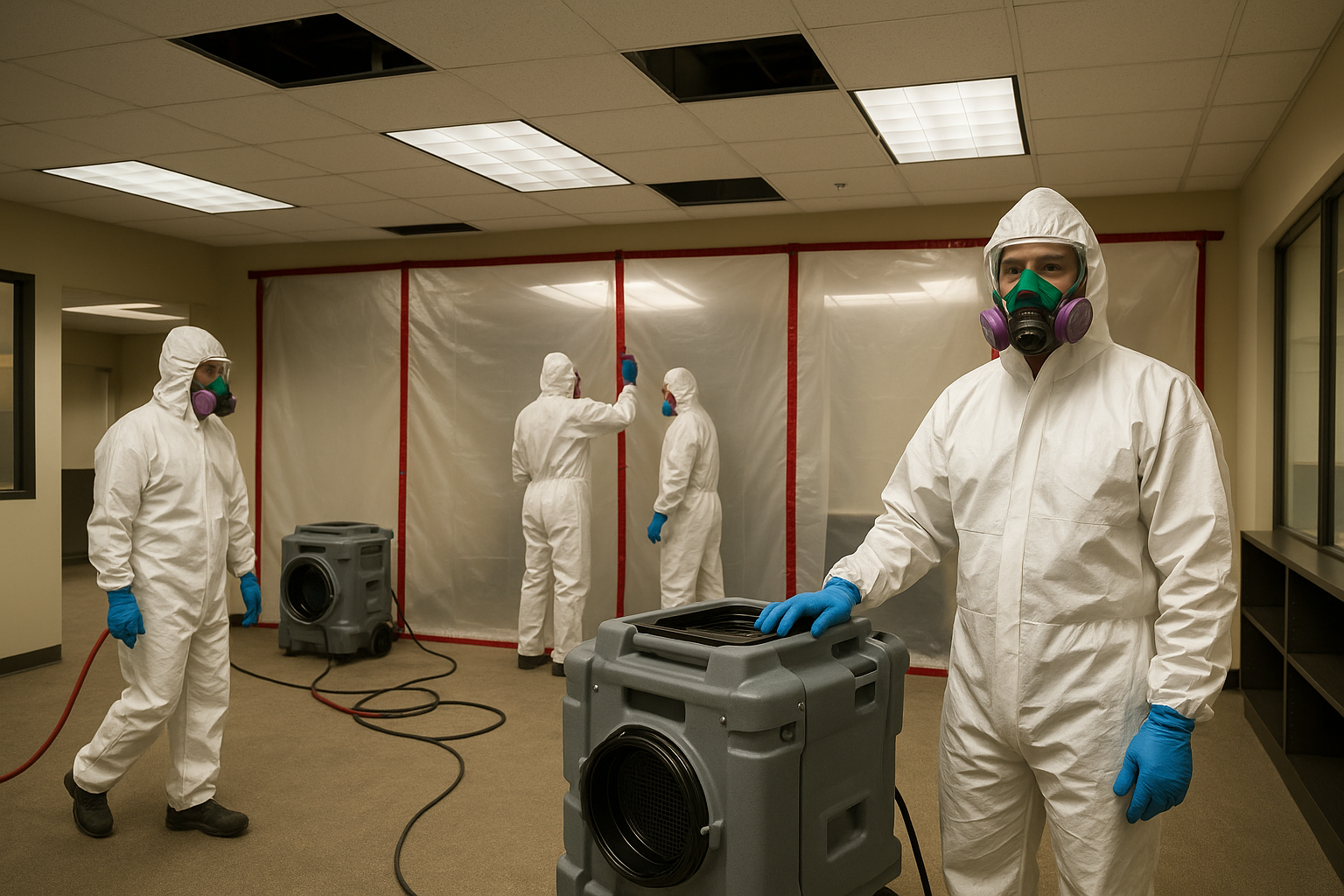
- Real containment. Negative-air containment and barriers that keep the rest of the space — and the public — safely separated from the work.
- Documentation. Inspection reports, scope, lab results, and clearance testing — the paper trail insurers, attorneys, and tenants expect.
- Discretion. Crews and signage that don't broadcast a problem to customers or the street.
- Coordination. Working alongside property managers, facilities staff, and other trades on a defined timeline.
Landlords: a documented, professional remediation protects you. When a tenant raises a mold concern, an independent inspection and a clearance-tested remediation create the record that shows you responded appropriately — far better than an informal patch that resurfaces later.
Common commercial scenarios in Grand Rapids
The calls tend to cluster: roof and flashing leaks over commercial drop ceilings; basement and ground-floor moisture in older masonry buildings; HVAC and rooftop-unit condensation feeding mold above ceilings; tenant-space water damage from a unit upstairs; restaurant and break-room moisture; and rental turnovers where a unit sat closed up or had an unreported leak. Each gets the same backbone — find the moisture, contain, remove, dry, verify — adapted to a working building.
Scope and cost
Commercial pricing depends on square footage, after-hours scheduling, the complexity of containment in an occupied building, and documentation requirements, so it's always scoped individually after an assessment. What's consistent is the value of getting it right: a clean, documented remediation that limits downtime and closes out the liability is worth far more than the cheapest bid. We can connect you with licensed local pros experienced in occupied commercial work and the reporting that comes with it.
Let's scope it properly
Whether you manage one building or a portfolio, the right first step is an independent assessment that documents the problem and its source. Tell us about the property — type, size, whether it's occupied, and what you're seeing — and we'll connect you with a licensed Grand Rapids commercial remediation pro for a free, no-pressure consultation and quote. For time-sensitive situations, call (616) 816-2703.
Commercial mold is a business-continuity problem
For a Grand Rapids business, mold is rarely just a maintenance line item — it's a risk to your tenants, your customers, your staff, and your ability to stay open. A medical or dental office faces infection-control standards. A restaurant faces the health department. A landlord faces habitability obligations to tenants. A school or daycare faces parents. The remediation companies we connect you with understand that the clock and the stakes are different in a commercial building, and they plan the work around keeping you operating.
Working around your operations
Commercial projects are as much logistics as remediation. That often means after-hours and weekend scheduling, phased work that isolates one wing or floor while the rest of the building stays open, robust containment so dust and spores never reach occupied areas, and coordination with your facilities team, your HVAC contractor, and sometimes a property manager or insurer. In larger buildings the HVAC system itself can distribute spores floor to floor, so assessing and isolating the air handling is often part of the scope. Clear daily communication and documentation keep a project like this from disrupting the business any more than it has to.
Documentation, liability, and getting it in writing
Commercial work lives and dies on documentation. Pre- and post-remediation testing, a written scope, moisture logs, and clearance results aren't bureaucracy — they're what protect you in a lease dispute, an insurance claim, a sale, or a tenant complaint. A qualified commercial remediation firm carries appropriate insurance, follows recognized industry standards, and hands you a clean paper trail at the end. We're a free referral service connecting West Michigan businesses with those firms; tell us your building type, the affected area, and your timeline, and we'll match you with companies equipped for the job and ready to quote.