
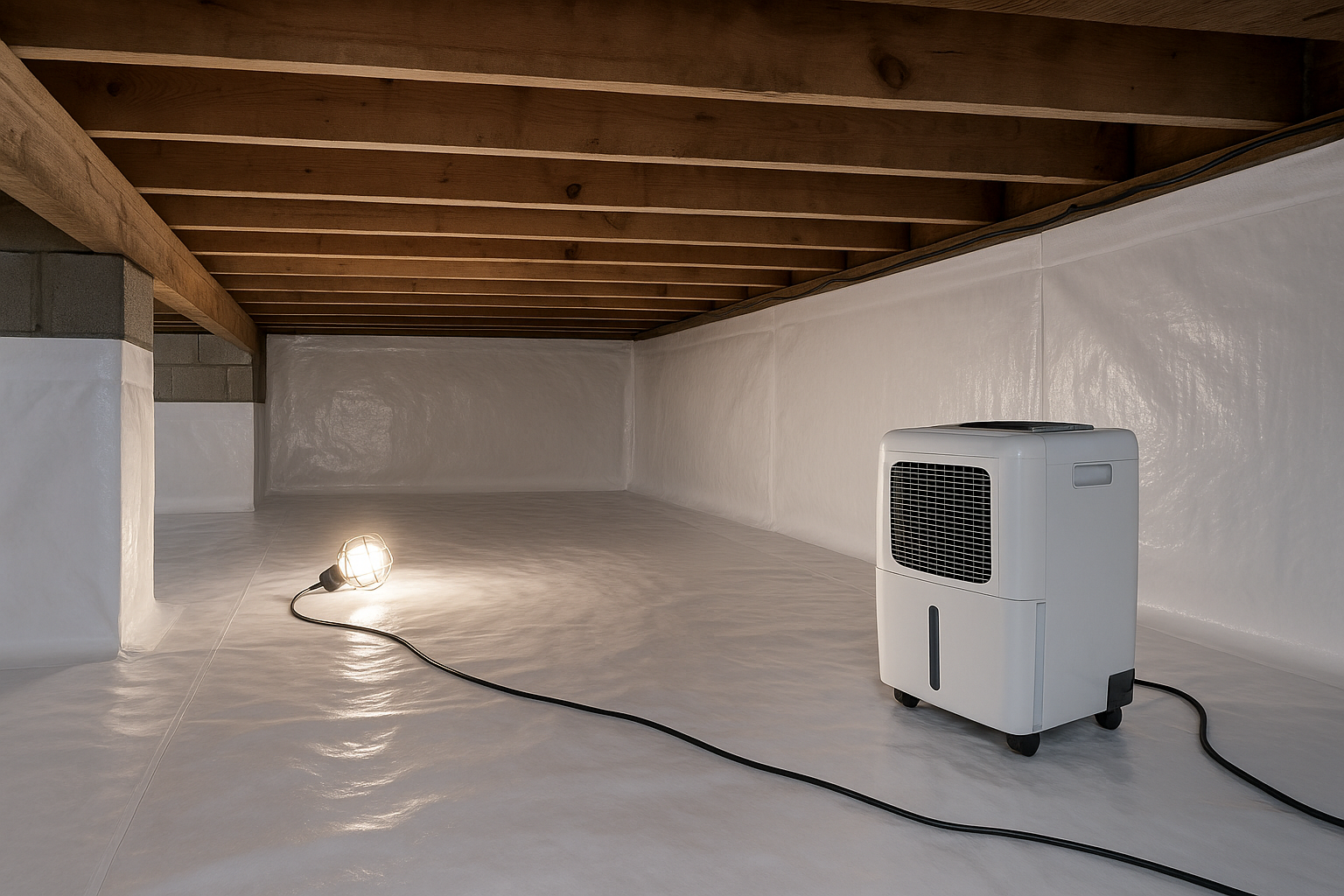
Why crawl spaces grow mold in Grand Rapids
The traditional vented crawl space was built on a theory that doesn't hold up in a humid Great Lakes climate: open vents to the outside and let air dry things out. In practice, when warm, moisture-heavy June and July air drifts into a cool crawl, it condenses on the cold floor joists, ducts, and subfloor — the same way a glass of iced tea sweats on a summer porch. That condensation, plus moisture rising out of bare dirt, keeps the wood framing damp enough to grow mold for months. Because almost nobody goes down there, it can run for years before the musty smell finally pushes up through the floor into the living space.
Add the West Michigan extras — spring snowmelt pooling under the house, a downspout discharging near a vent, a missing or torn ground cover — and a crawl space becomes the hidden source behind musty floors, cupping hardwood, and allergy symptoms the homeowner can't trace.
The “stack effect” nobody talks about
Here's why a crawl-space problem isn't just a crawl-space problem. Air in a house rises — warm air leaves through the upper floors and attic, which pulls replacement air up from the lowest level. Building scientists call it the stack effect, and it means a meaningful share of the air you breathe upstairs started in the crawl space. If that crawl is damp and moldy, its spores and musty odor get drawn up into your bedrooms. Fixing the crawl is often the single biggest improvement you can make to the air in the whole house.
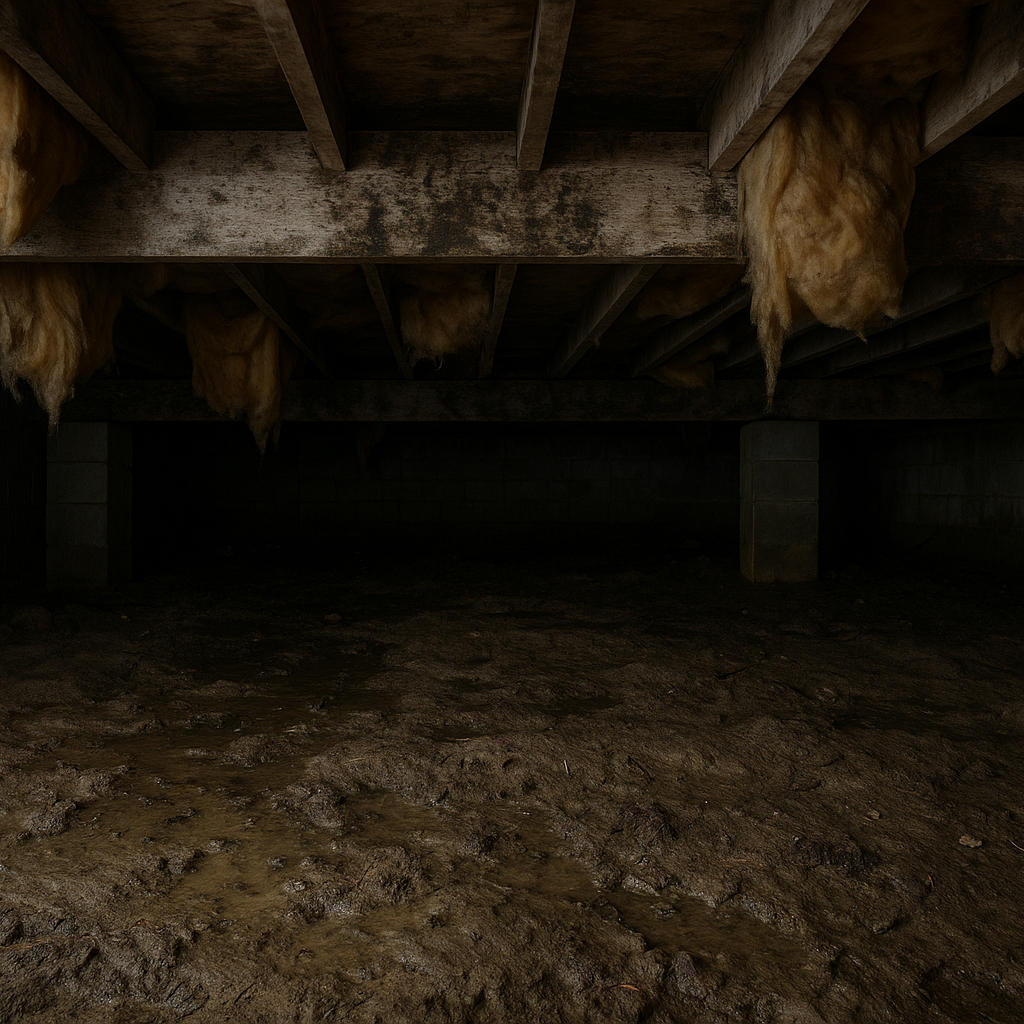
Open dirt crawl with mold on the joists and subfloor.
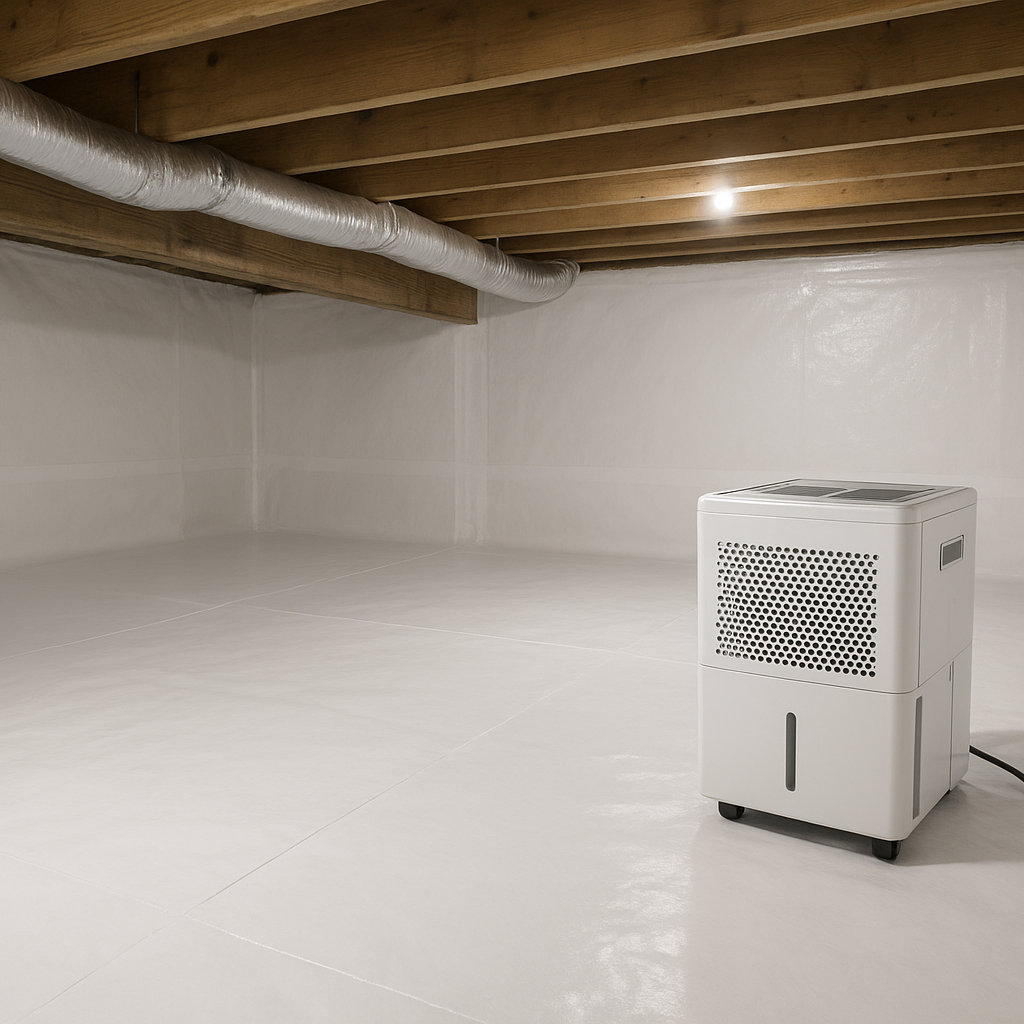
Cleaned, treated, and fully encapsulated.
Removal and encapsulation, step by step
- Clear and clean. Remove debris, old fallen insulation, and any standing water; HEPA-vacuum and treat the framing to kill and remove existing growth.
- Stop the water. Address grading, downspouts, and any active seepage; add a perimeter drain and crawl-space sump where groundwater is the issue.
- Seal the ground and walls. Install a heavy reinforced vapor barrier across the floor and up the foundation walls, sealed at seams and the perimeter — the “encapsulation” that cuts off ground moisture.
- Close the vents. In a conditioned-crawl approach, the outside vents are sealed so humid summer air can't pour in and condense.
- Control humidity. A dedicated crawl-space dehumidifier holds the space dry year-round and keeps the wood from ever getting wet enough to grow mold again.
Encapsulation without moisture control is half a job. A vapor barrier alone slows ground moisture, but in this climate you also need to handle bulk water and summer humidity. The lasting fix is drainage plus a sealed barrier plus a dehumidifier working together.
Signs your crawl space is the problem
- Musty smell on the main floor, strongest near floor registers or the access hatch.
- Cupping, buckling, or cold spots in hardwood or laminate floors above the crawl.
- Sagging or falling fiberglass insulation between the joists (a classic sign of chronic dampness).
- Condensation or rust on ducts and pipes in the crawl during summer.
- Higher allergy symptoms in the rooms directly over the crawl.
What crawl-space work costs in Grand Rapids
A clean-and-treat on a small, dry crawl with light surface mold can be a modest four-figure job. A full encapsulation — cleaning, treating joists, drainage, a sealed reinforced barrier, and a dehumidifier — typically lands in the mid four figures to low five figures depending on square footage, how much water management is needed, and access. It's more than a spray-and-go, but it solves the moisture permanently rather than treating the same mold every couple of years. Use our cost estimator for a starting range and the cost guide for how the pieces are priced.
Worth doing right
A properly encapsulated crawl space is one of those fixes you do once: cleaner air upstairs, protected framing and floors, lower humidity, and often a more comfortable, easier-to-heat house. If you've smelled something musty and traced it toward the floor, start with an inspection so the moisture source is clearly identified, then tell us what's going on and we'll connect you with a licensed Grand Rapids pro for a free quote.
Why encapsulation beats spot-cleaning a crawl space
A vented crawl space in West Michigan is a moisture trap. Building code once assumed outdoor air would dry these spaces out, but in our humid summers the opposite happens: warm outdoor air rolls in through the vents, hits cool earth and foundation walls, and condenses on the framing overhead. The result is wet joists, sagging fiberglass batts, and mold on the subfloor that feeds the rooms above through the stack effect. Spot-cleaning that mold without changing the conditions is a service call you'll repeat every year.
Encapsulation changes the conditions instead. After the existing mold is remediated and any standing-water and drainage issues are corrected, the crew lines the floor and walls with a heavy reinforced vapor barrier, seals the seams, closes the vents, and adds a dedicated dehumidifier or a conditioned-air supply to hold humidity in check. The crawl space effectively becomes part of the building envelope — dry, sealed, and no longer a reservoir feeding moisture and spores into your floors.
What you gain besides a mold fix
Homeowners who encapsulate usually notice more than cleaner air. Floors over the crawl space feel warmer in winter because you've stopped pulling cold, damp air up through them, and many see their heating and cooling run a little easier once the space below stops fighting the conditioned air above. A sealed, lined crawl space is also far less inviting to the rodents and insects that follow moisture. And when it comes time to sell, a clean, encapsulated crawl space with documentation reads to inspectors and buyers as a house that's been cared for rather than a hidden liability under the floor.