
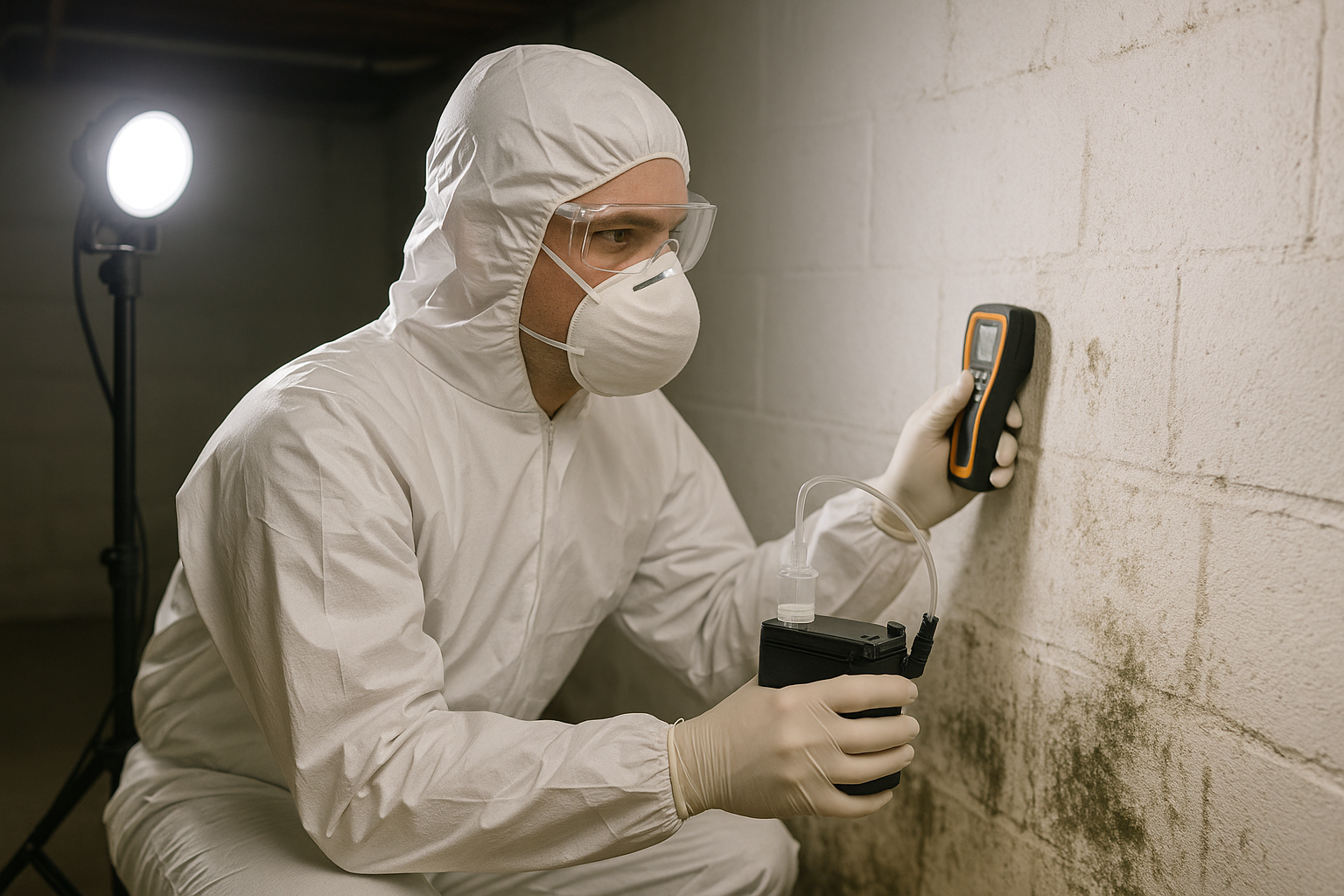
Why an inspection comes first
Mold is never the real problem — it's a symptom. In a Grand Rapids home, the actual problem is almost always trapped moisture: a basement wall that wicks groundwater every spring, a sump pit that ran dry and let the water table climb, a crawl space breathing humid summer air, or an ice dam that pushed meltwater under the shingles in February. A good inspection is built to find that source. Without it, you can spend thousands tearing out drywall only to watch the mold come back the next wet season, because nobody fixed the leak feeding it.
That's also why we point homeowners toward independent inspectors rather than the remediation crew's own walkthrough. When the company that scopes the job is also the company that profits from the job, the incentive runs one direction. An inspector who doesn't do removal can tell you the honest version: sometimes that's “you have a real problem in three rooms,” and sometimes it's “this is surface mildew on a cold wall — clean it, run a dehumidifier, and save your money.”
What a Grand Rapids mold inspection actually covers
A thorough local inspection is part detective work and part building science. Expect a professional to:
- Walk the moisture story. Basement, crawl space, attic, bathrooms, around windows, and any spot with a history of leaks or flooding — the places West Michigan homes actually grow mold.
- Use instruments, not just eyes. Moisture meters on framing and drywall, a hygrometer for indoor humidity, and often an infrared camera to spot cold, damp areas behind finished walls without cutting them open.
- Check the mechanicals. Sump pump and pit, gutter and downspout discharge, grading against the foundation, dryer and bath-fan venting, and the HVAC system that can spread spores room to room.
- Sample when it adds value. Air samples (indoor vs. an outdoor baseline) and surface or tape lifts sent to an accredited lab when the species or spore count actually changes the plan.
- Scope and prioritize. A written report that says what's affected, how far it goes, what's driving it, and what should happen first.
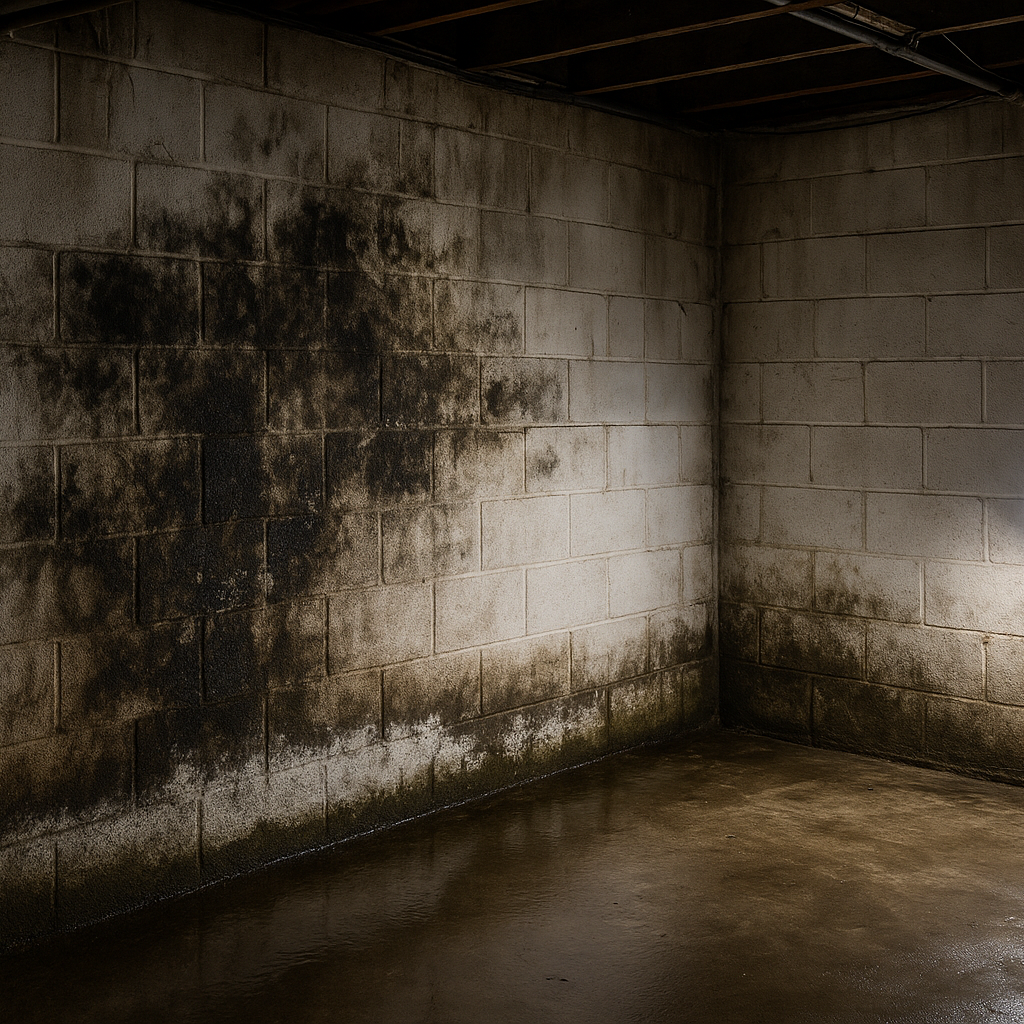
Inspection flagged this foundation wall and the sump area.
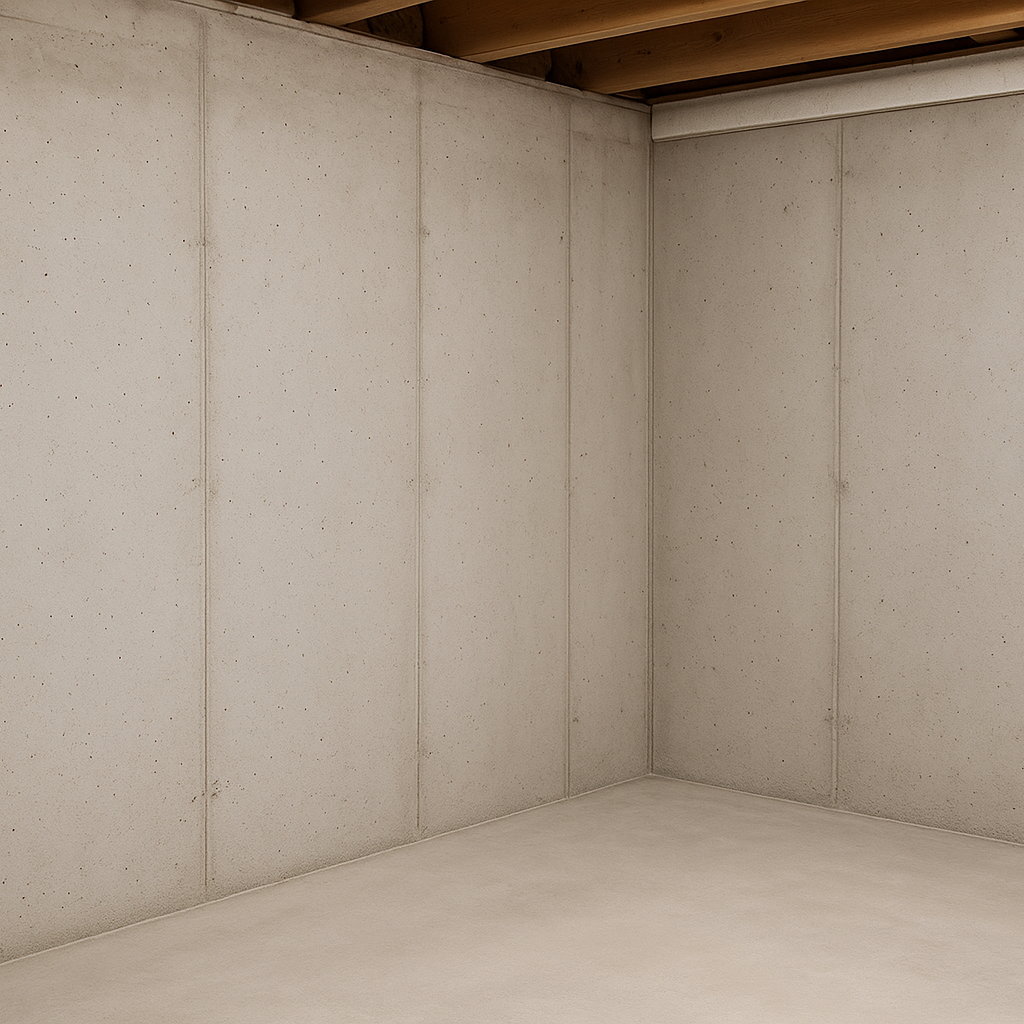
After the source was corrected and the wall remediated.
Do you really need a mold test?
Honest answer: often not. If you can see mold and smell it, a lab test mostly confirms what you already know — the mold still has to come out and the water source still has to be fixed regardless of the species. Testing earns its keep in specific situations: a musty smell with no visible source, a real-estate transaction where a buyer or seller wants documentation, a health complaint where you need to know what's airborne, or a post-remediation clearance to confirm the work actually worked.
Be wary of “free” mold tests tied to a sales quote. A test is only meaningful if it's collected and read properly and interpreted against an outdoor baseline. The most useful clearance test is one performed by someone who didn't do — and won't profit from — the removal.
Air sampling vs. surface sampling
The two answer different questions. Surface samples (swabs or tape lifts) tell you whether that dark patch on the joist is actually mold and roughly what kind — useful when you're staring at something and aren't sure. Air samples capture what's floating in the air you breathe, compared against an outdoor control taken the same day. A finished basement that looks clean but reads high on an indoor air sample is telling you there's a hidden reservoir — often inside a wall cavity or under the carpet pad — that a visual inspection alone would miss.
What inspection and testing cost in Grand Rapids
A straightforward visual moisture inspection of a single-family home commonly runs in the low hundreds; add lab-analyzed air or surface sampling and you're typically looking at a few hundred more depending on how many samples are pulled. A full pre-purchase or whole-home assessment with multiple samples and a written report lands higher. Many remediation companies will credit an inspection fee toward the work if you hire them — reasonable, as long as the inspection itself was honest. Our cost estimator and Grand Rapids cost guide can help you sanity-check any number you're quoted.
After the inspection
You should walk away knowing three things: where the moisture is coming from, how far the mold has actually spread, and what the priorities are. From there the path is clear — a contained removal for the affected materials, the moisture fix that keeps it from returning, and, if it matters to you, a clearance test at the end. If the report points to a specific problem, our service pages on basement mold, crawl spaces, and attic and ice-dam damage explain what proper remediation looks like for each. Tell us what the inspector found and we'll match you with a licensed local pro for a free quote on the work.
What a thorough inspection looks like in a Grand Rapids home
A real inspection is part building science, part detective work. The pros we match you with start outside, where most West Michigan moisture problems begin: grading that slopes back toward the foundation, downspouts that dump within a foot of the block, window wells that hold snowmelt, and ice-dam staining on the eaves. Inside, they move from the lowest level up, because gravity and stack effect pull damp basement air through the whole house. Expect them to pull back carpet edges, check behind finished basement walls where condensation collects, open the access hatch to the crawl space, and put a moisture meter on drywall, subfloor, and the rim joist.
Instruments matter here. A pin or pinless moisture meter finds wet material a nose can't, a hygrometer reads the relative humidity that decides whether spores can grow, and an infrared camera shows the cold, damp patches behind walls where Grand Rapids condensation hides. When the question is “what kind and how much,” an air sample run through a calibrated pump and sent to an accredited lab compares the spore count inside to a baseline taken outdoors that same day — the only way to know whether an indoor reading is actually elevated for the season.
Reading your report without the jargon
A good lab report names the genera found — Aspergillus, Penicillium, Cladosporium, Stachybotrys — and gives spore counts for indoors versus outdoors. What you care about is the comparison and the story behind it: an indoor count well above the outdoor baseline, or the presence of water-damage markers like Stachybotrys and Chaetomium, points to an active moisture source that has to be fixed, not just cleaned. The inspector should translate that into a plain-language scope: where the moisture is coming from, how much material is affected, and what remediation will involve. Hold onto that report — it becomes your baseline if you ever need to prove the problem was resolved for a buyer, a landlord, or an insurer.