
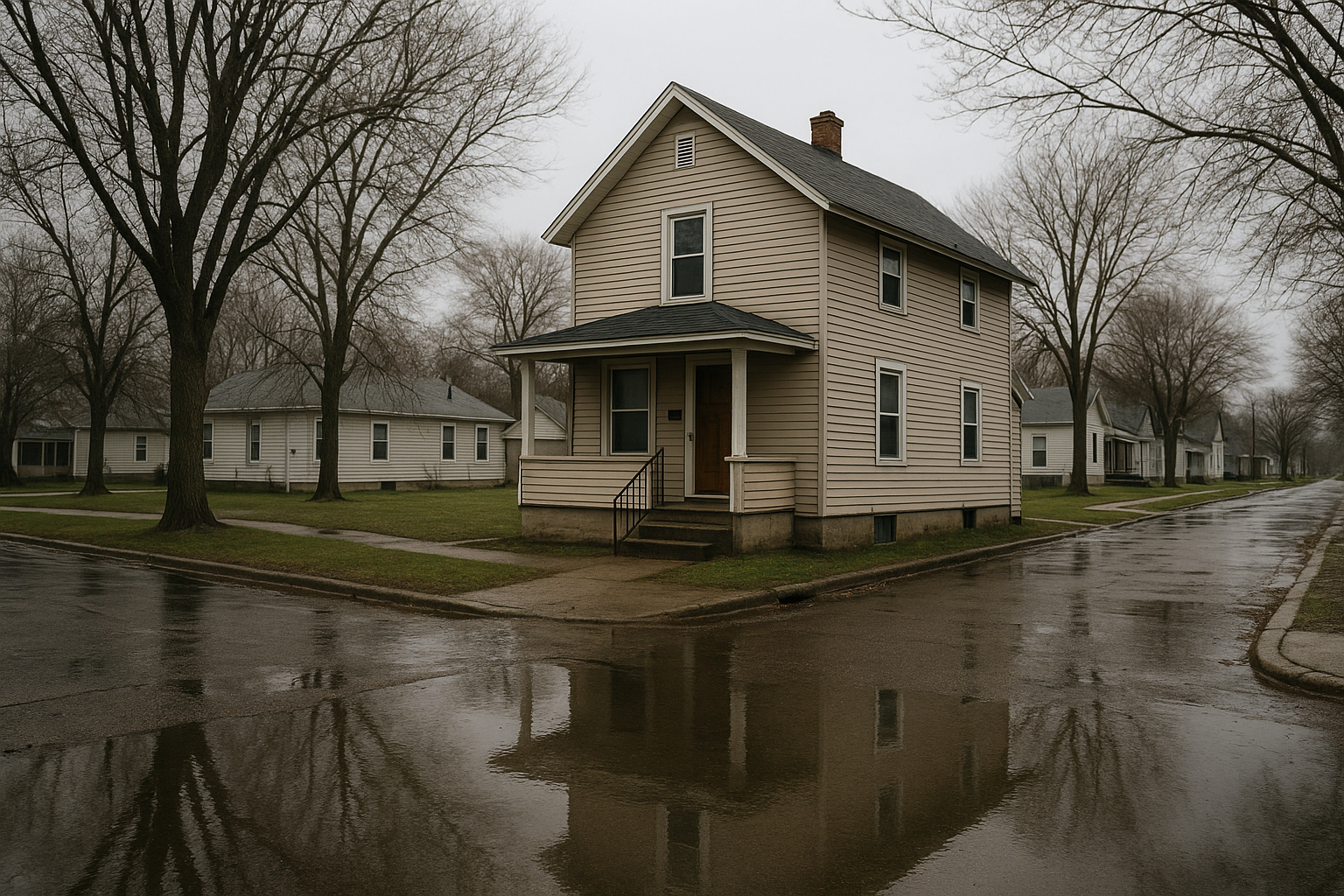
The flood side of the river
If any part of Grand Rapids understands water in the basement, it's the West Side. The neighborhoods on the west bank of the Grand River sit low, and they carry the city's deepest flood history — from the catastrophic flood of 1904, when snowmelt and an ice jam at the railroad bridge pushed the river over 20 feet, to the record 2013 flood that crested near 21.9 feet and put water across riverfront blocks on both banks. Even in ordinary years, the combination of a high water table, spring thaw, and heavy rain keeps West Side basements damp.
That history shapes the mold work here. Homes on the West Side range from tight worker cottages and Polish-heritage bungalows to larger old homes, many with stone or early-block foundations and basements that have taken on water more than once. When a basement has flooded — even years ago — and was never fully dried and remediated, mold can persist in framing, behind finished walls, and under floors long after the water is gone.
Why West Side basements need a flood-aware approach
Mold remediation on the West Side is often really flood remediation. The crews we match you with here know to look past the visible staining for the high-water line, to check whether river or storm water (which is contaminated) was involved versus clean groundwater, and to remove and replace soaked porous materials rather than just drying them in place. They also think about the next event: sump pumps with battery backup, proper grading, and where it makes sense, sealing and waterproofing measures that reduce how much water gets in during the next thaw.
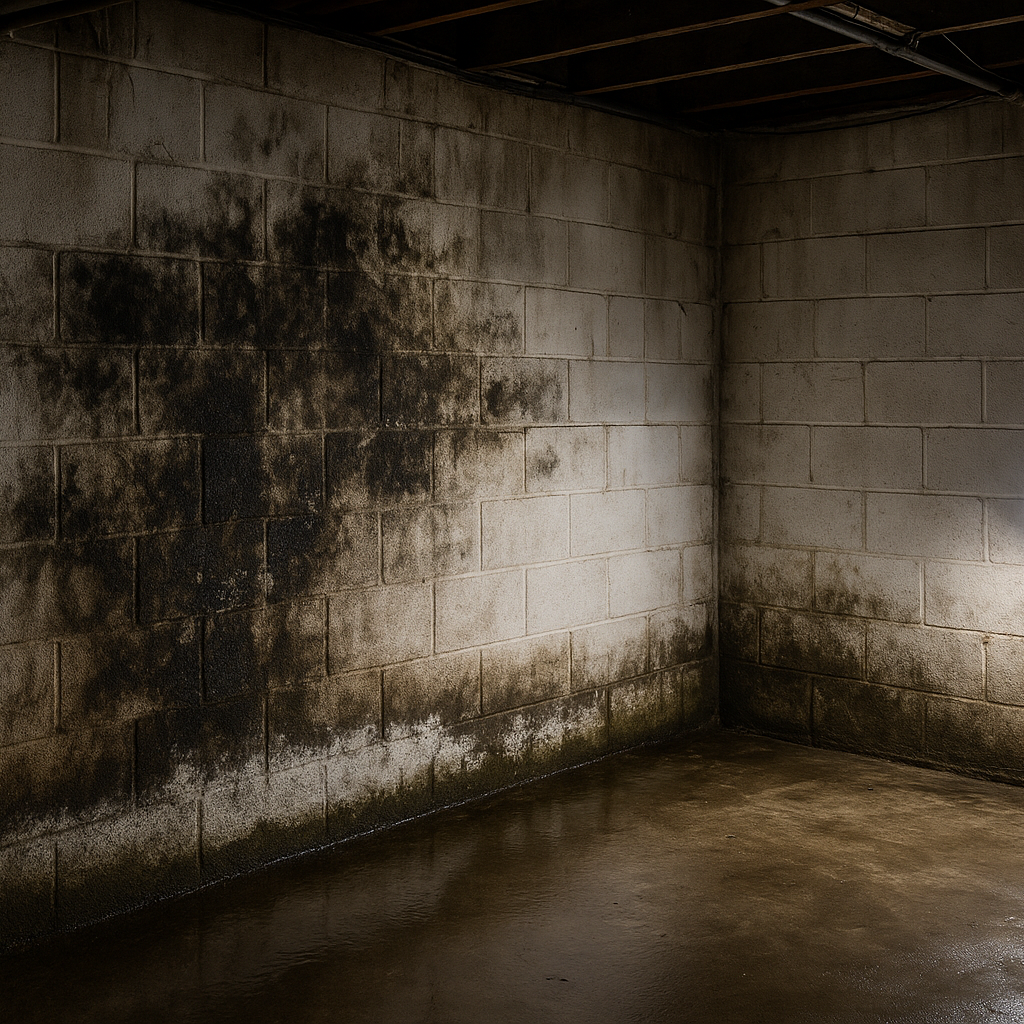
Mold after river-water intrusion
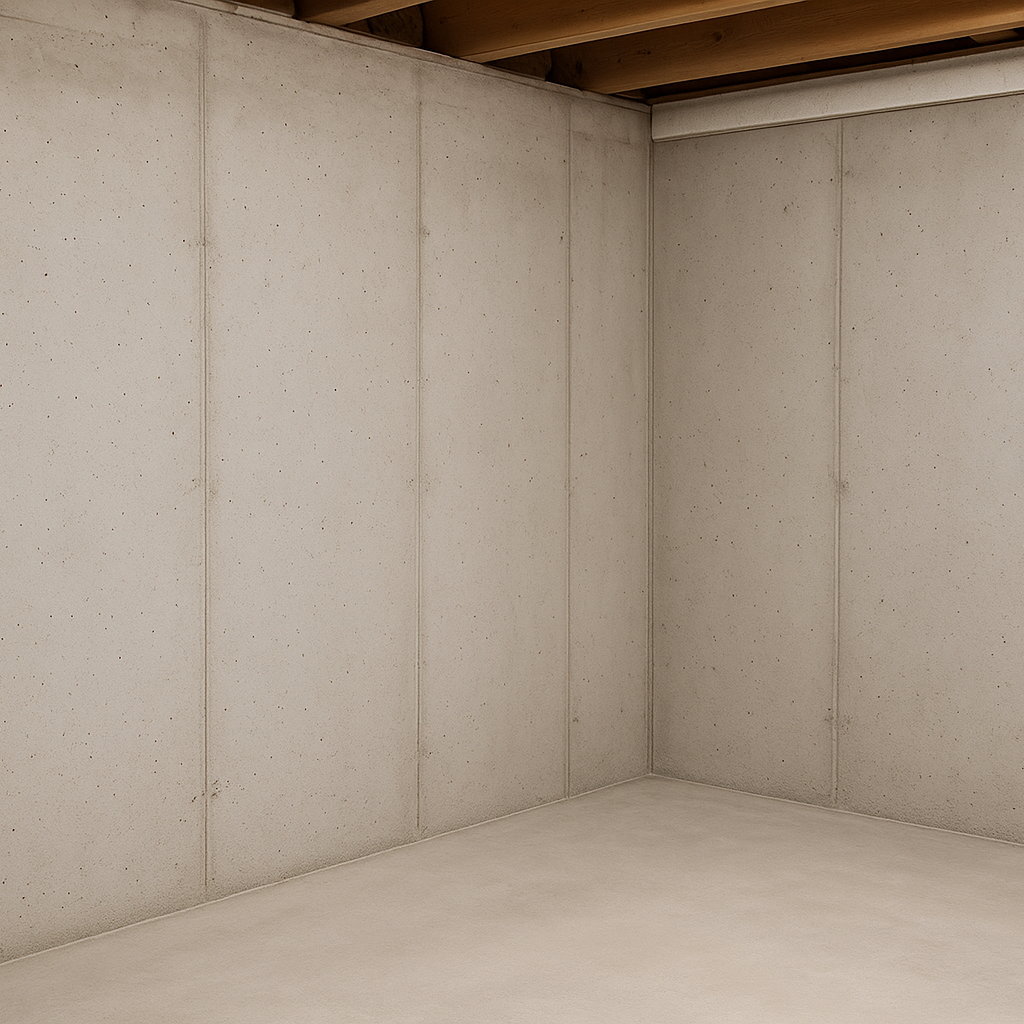
Cleaned, treated, and dried
If your West Side basement has flooded
After any flooding, the clock starts immediately — mold can begin within a day or two on wet materials. If you've had water in the basement this spring or in a past event, a moisture assessment tells you whether the structure dried properly or whether mold has set in where you can't see it. Our guide on what to do after basement or river flooding walks through the first steps.
How the seasons drive mold in West Side
On the low-lying West Side, spring is by far the dangerous season, when river levels and the water table rise together.
Spring: Spring thaw is the high-risk season: a deep snowpack and saturated ground push water against foundations and up through slabs, and heavy rains raise the water table and the rivers. This is when most basement moisture and flooding calls come in.
Summer: Humid West Michigan summers are the other danger window. Warm, moist outdoor air pours into cool basements and vented crawl spaces and condenses on the cold surfaces there, feeding mold even without any leak or flood.
Winter: Through the long heating season, warm indoor air carries moisture toward cold surfaces — attic sheathing, exterior walls, and chilly basement corners — where it condenses and feeds mold out of sight. Ice dams add meltwater under shingles.
Because the moisture pressure shifts with the calendar, the best defense in West Side is to fix the source and control humidity year-round rather than reacting season by season. A local inspection identifies which seasonal pattern is driving your problem.
How matching works in West Side
We're not a remediation crew — we're a free local referral service. You tell us what's going on, send a photo if you have one, and we match you with a vetted Grand Rapids–area mold company that serves West Side. They come out, inspect, and quote; you choose whether to move forward. There's no cost or obligation to get matched, and you're talking to a real local pro, not a national call center.
Because we work with more than one company across Kent County, we can usually line up a fast appointment even in spring, when thaw and rain keep every remediation crew in the region busy. Call (616) 816-2703 or send the form and we'll get the right local pro headed your way.
Neighborhoods we serve in and around West Side
We match homeowners with mold removal pros throughout West Side and the surrounding Grand Rapids area, including the Stockbridge and Bridge Street corridors, John Ball Park, the West Grand and West Fulton neighborhoods, Leonard Street, and the riverfront blocks west of the Grand. If you're nearby and not sure whether you're in our coverage, just ask — our network of vetted companies serves all of Kent County. Common ZIP codes here include 49504, 49534.