
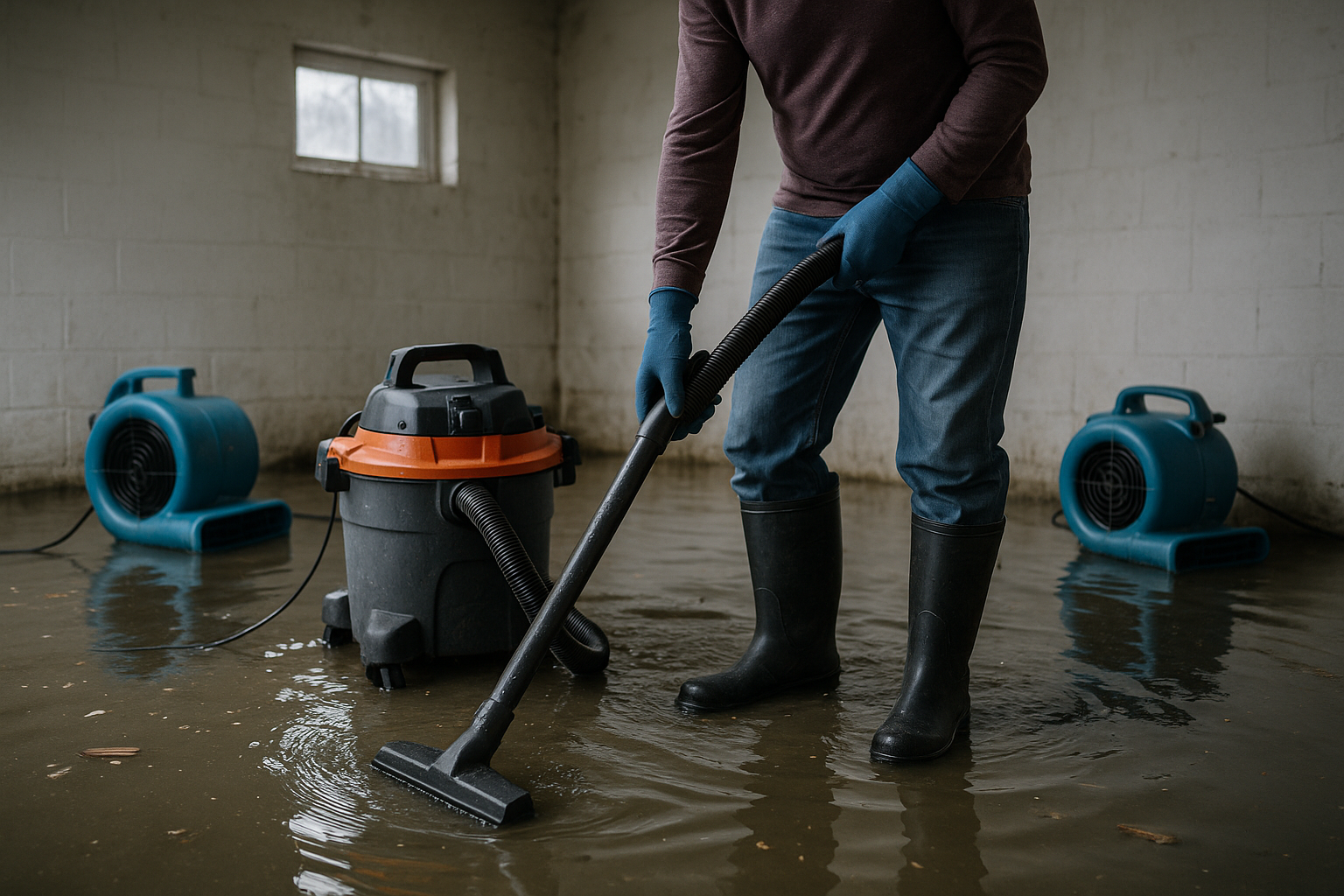
Whether it's the Grand River backing into a low-lying basement, a sump pump that failed during the thaw, or a burst pipe, basement flooding is stressful and time-sensitive. Mold can begin growing on wet materials within 24 to 48 hours, so what you do in the first two days matters enormously. Here's a calm, ordered plan.
Step 1: Stay safe first
Before you wade in, address the hazards:
- Electricity: If water is near outlets, the panel, or appliances, do not enter. Shut off power to the basement at the breaker only if you can do so safely from a dry spot — otherwise call an electrician or your utility.
- Contaminated water: River floodwater and sewer backups carry bacteria. Wear waterproof boots and gloves, avoid skin contact, and keep kids and pets out.
- Gas: If you smell gas or suspect appliance damage, leave and call your utility.
Step 2: Document everything before you remove anything
Before cleanup, photograph and video the standing water, the waterline on the walls, and every affected item and material. This documentation is what your insurer needs, and it's far easier to capture now than to reconstruct later. Note the date, the apparent source, and how high the water reached.
Step 3: Stop the source if you can
If the water is from a burst pipe or appliance, shut off the water supply. If it's groundwater or river water, there may be nothing to “turn off,” but note whether your sump pump is working and whether it was overwhelmed or failed — that affects both repairs and your claim.
Step 4: Remove the water fast
The faster the water is out, the less you lose. For small amounts, a wet/dry vacuum and mops may suffice. For significant flooding, a submersible pump or professional extraction is the move — and professional crews can also begin structural drying immediately, which a homeowner usually can't. Speed here is the single biggest factor in preventing mold.
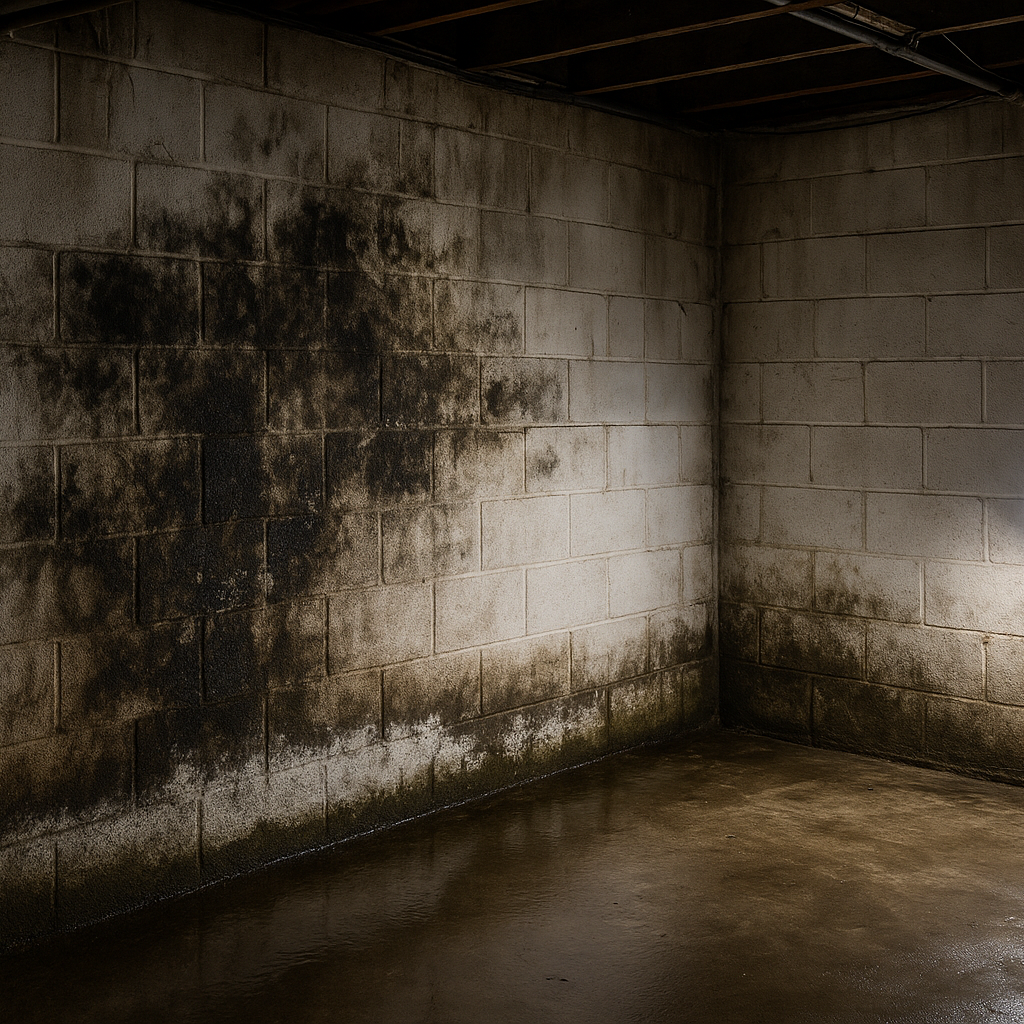
Before: standing water and saturated materials

After: extracted, dried, and treated
Step 5: Remove wet porous materials
Saturated porous materials are where mold takes hold first, and after contaminated (river or sewer) water they generally can't be saved. Get them out quickly:
- Carpet and padding — especially after contaminated water.
- Soaked drywall (the paper face feeds mold fast) — cut above the waterline.
- Wet insulation, which holds water and won't dry in place.
- Cardboard boxes, paper, and upholstered items that wicked water.
Solid, non-porous items (plastic bins, metal, sealed concrete) can often be cleaned and disinfected. When in doubt after contaminated water, throw it out.
Step 6: Dry thoroughly — not just visibly
This is the step homeowners underestimate. Surfaces can feel dry while framing and concrete stay wet enough to grow mold. Commercial-grade dehumidifiers and air movers running for several days are what truly dry a structure. Fans and open windows help with small events but rarely finish the job on a real flood. Professionals use moisture meters to confirm materials are actually dry before anyone rebuilds.
Step 7: Watch for mold over the following weeks
Even with a good response, keep an eye (and nose) on the space for a few weeks. A returning musty smell, new spotting, or fresh staining means moisture lingered somewhere. Catching it now keeps it small.
Insurance: know what's covered
This trips up many Grand Rapids homeowners: standard homeowners policies often exclude flooding from rising water (the river, the thaw), which is covered only by a separate flood policy. A sump-pump-failure or sewer-backup endorsement may cover other scenarios. The cause determines coverage, which is exactly why your documentation from Step 2 matters. Our Michigan insurance guide covers this in detail. We're a referral service, not your insurer — but the remediation companies we match you with document moisture readings and removed materials, which strengthens your claim.
When to call a professional
For a few inches of clean water you caught immediately, you may handle it yourself. Call a professional when the flooding is significant, the water was contaminated (river or sewer), it sat for more than a day, or mold is already appearing. Speed matters, so don't wait — we'll match you with a Grand Rapids flood and mold response company fast. Call (616) 816-2703.
A printable first-48-hours checklist
When water is in the basement, it helps to work a list rather than react. In order:
- Make the area safe — address electricity, gas, and contaminated water before entering.
- Photograph and video everything before moving or removing anything.
- Stop the source if it's a pipe or appliance; note your sump pump's status.
- Get the water out as fast as possible — extraction or pumping.
- Remove saturated porous materials, especially after contaminated water.
- Start aggressive drying with dehumidifiers and air movers, not just fans.
- Disinfect surfaces if the water was contaminated.
- Call your insurer to report the loss and confirm what's covered.
- Watch the space for a musty smell or new staining over the following weeks.
Why river floods need extra caution
In flood-prone Grand Rapids neighborhoods like the West Side and Comstock Park, basement water is often river water — and river water is contaminated “black water” carrying bacteria, silt, and whatever it picked up upstream. That changes the rules: porous materials it touched generally must be removed rather than dried, surfaces must be disinfected, and protective equipment matters more. It's also the scenario most likely to fall outside standard homeowners coverage. If you're in a floodplain, knowing this before the next thaw — and having a flood-response company in mind — saves precious hours when the river rises.