
Mold needs three things: moisture, organic material to eat, and time. West Michigan supplies the first generously, our homes are full of the second, and our climate provides the third in every season. If you've wondered why mold seems more persistent here than in drier parts of the country, it's not your imagination — Grand Rapids hands homes a moisture cycle that runs all year.
A humid continental climate with real winters
Grand Rapids sits in a humid continental climate, which means cold, snowy winters and warm, humid summers — the two extremes that most stress a building's moisture balance. In a dry desert climate, a damp basement might dry out on its own. Here it rarely gets the chance, because the air outside is often as humid as the air inside, and the ground stays cool and moist for much of the year.
Snowmelt and the spring thaw
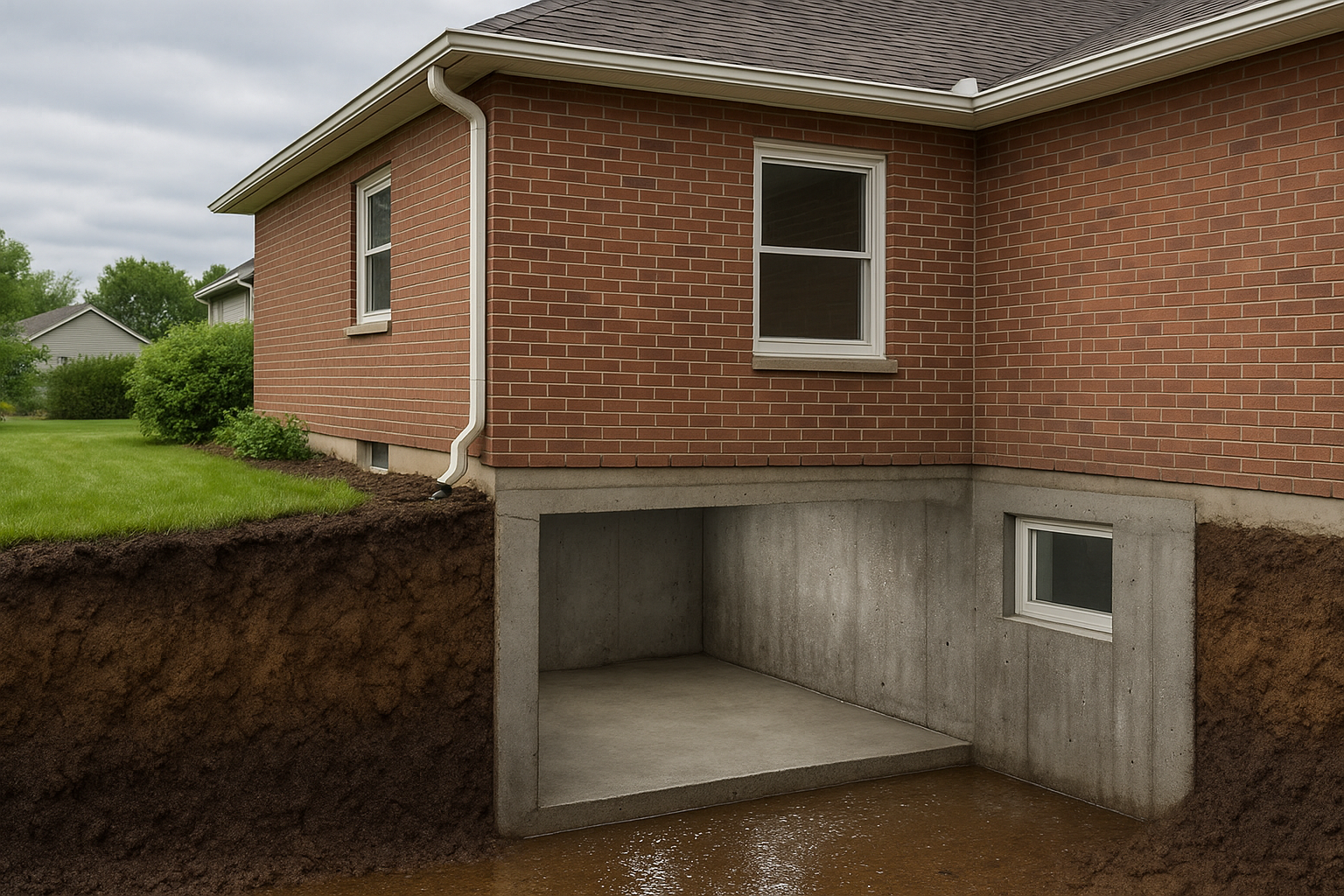
West Michigan's lake-effect snow piles up a deep snowpack over the winter. When it melts in spring — often quickly, and often alongside spring rain — the ground becomes saturated. That water has to go somewhere, and gravity sends much of it toward and against home foundations. The result is hydrostatic pressure pushing groundwater through every crack, cold joint, and porous block in your basement walls and floor. Spring is, by a wide margin, the season we field the most basement-moisture calls.
The Grand River and a history of flooding
The Grand River runs through the heart of the city, and it has a long memory. The great flood of 1904 saw the river crest over 20 feet after snowmelt and an ice jam. In 2013, it set a modern record, cresting near 21.9 feet and inundating riverfront areas. More recently, spring high water has repeatedly put river water into basements in low-lying communities like Comstock Park and along the West Side. For homes near the river or in the floodplain, this is a recurring reality, and any flooding that isn't fully dried becomes a mold problem.
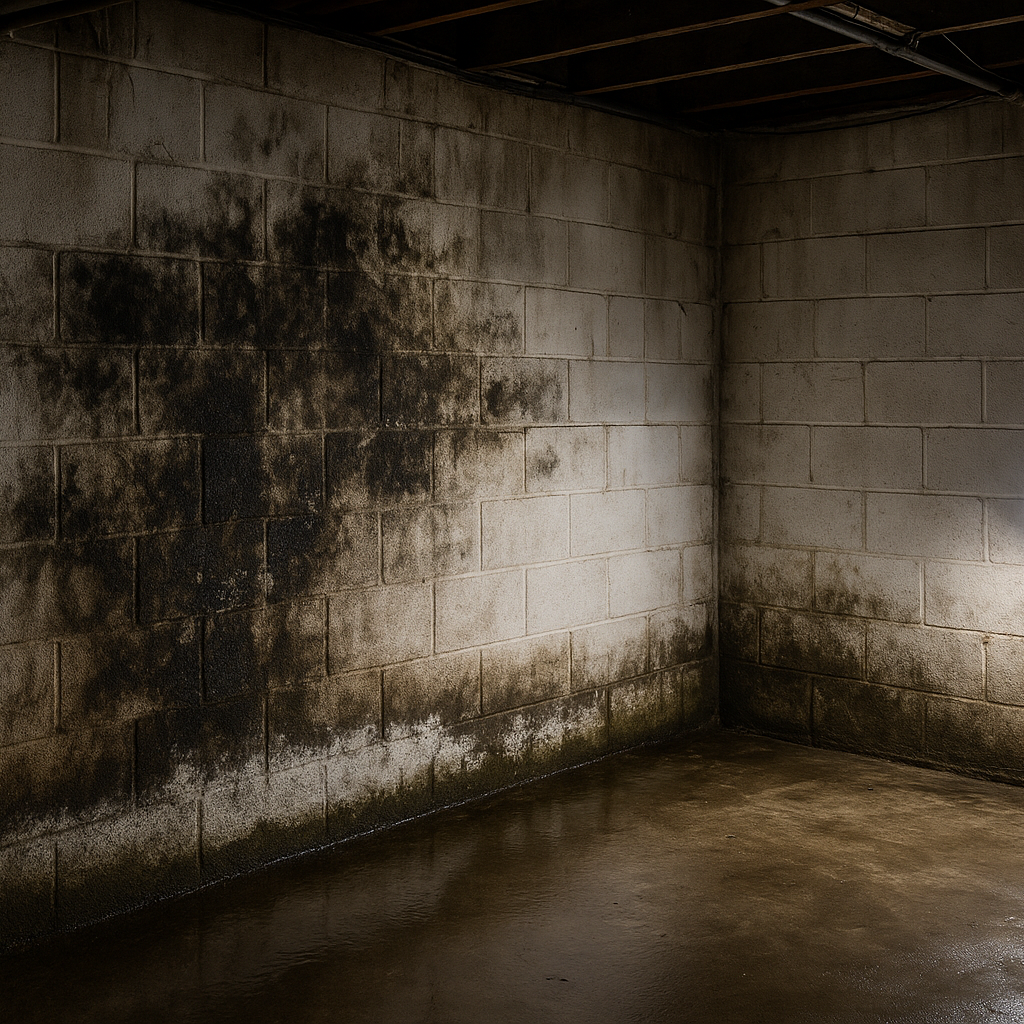
The problem found
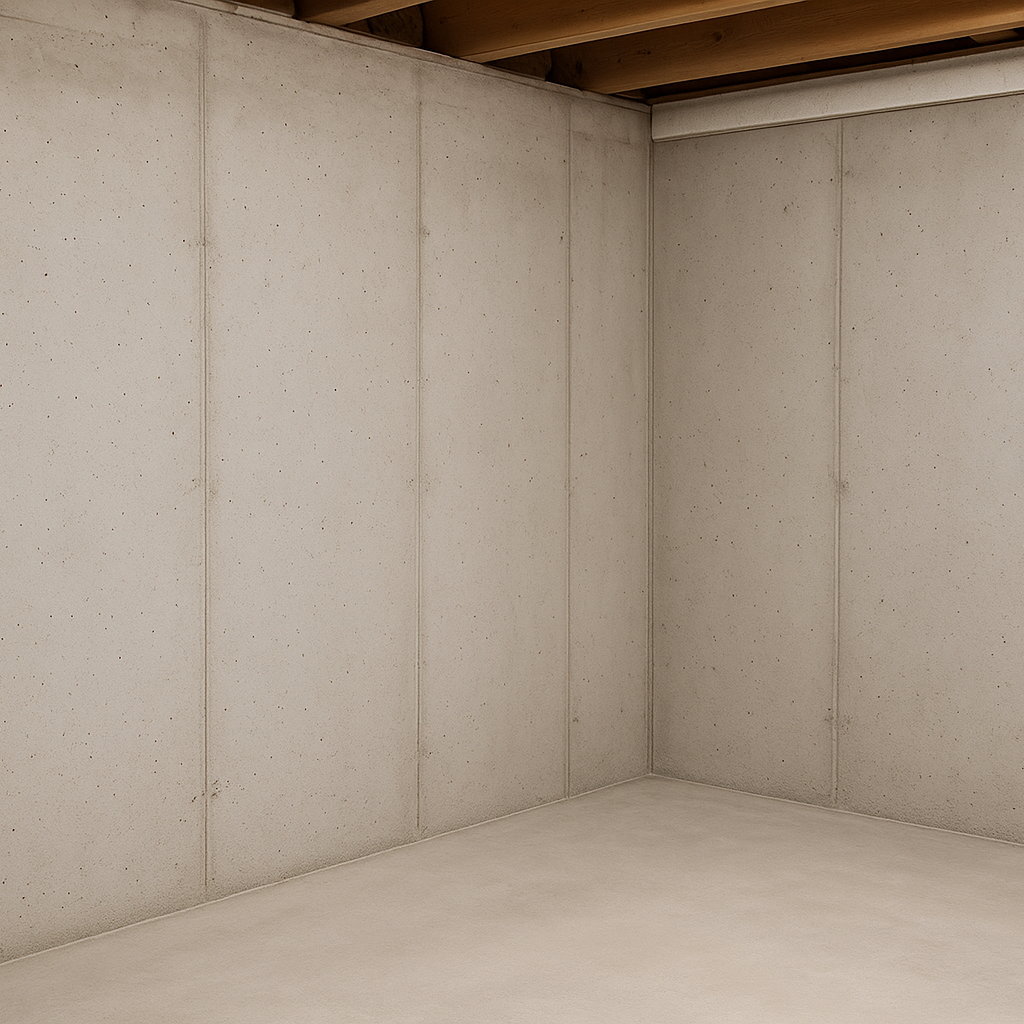
After remediation
Humid summers and cool basements
You'd think mold season ends when the snow does, but summer brings its own mechanism. Warm, humid outdoor air pours into basements and vented crawl spaces and meets surfaces that stay cool underground. The moisture in that warm air condenses on the cool block, concrete, and framing — the same way a cold drink sweats on a summer day — leaving them damp enough to grow mold with no leak or flood involved at all. This is why so many Grand Rapids basements smell musty in July.
Basements, crawl spaces, and our housing stock
Unlike warmer regions where slab-on-grade homes are common, nearly every home here has a basement or crawl space — below-grade spaces that are cool, often poorly ventilated, and in constant contact with damp soil. Our housing also skews old: Grand Rapids has whole neighborhoods of homes from the early 1900s and before, with stone or early-block foundations, balloon framing, and basements that were never designed to be dry living space. Finished basements added in later decades often put cellulose-rich drywall, carpet, and framing right against cool, damp masonry — an ideal mold buffet once moisture arrives.
Ice dams and attic moisture
Our winters add one more pathway most homeowners don't think about: the attic. Warm, moist indoor air leaks up into cold attics and condenses on the roof sheathing, and ice dams back meltwater up under the shingles. Both feed the attic mold we routinely find on the north-facing rafters of West Michigan homes. Our guide on ice dams, snowmelt, and attic mold covers this in depth.
The takeaway: control moisture, control mold
None of this means your Grand Rapids home is doomed to mold — it means moisture control is a year-round job here, not an occasional one. Good grading and downspouts, a working sump pump with backup, basement and crawl space humidity control, proper attic ventilation, and quick response to any water event keep the moisture out so the mold never gets its foothold. If mold has already taken hold, the lasting fix always starts by identifying which of these West Michigan moisture pathways is feeding it.
Which Grand Rapids homes are most at risk?
Some homes carry more risk than others. Older homes in neighborhoods like Heritage Hill, Eastown, and the West Side combine aging foundations, balloon framing, and basements never designed to stay dry. Homes near the Grand River and its tributaries — the West Side, Comstock Park, and low spots in Forest Hills and Cascade along the Thornapple — add flood exposure. Mid-century homes in Wyoming, Kentwood, and the suburbs often sit over vented crawl spaces that trap summer humidity. And any home with settled grading, short downspouts, an aging sump pump, or a finished basement built tight against cold masonry is a candidate regardless of neighborhood. Knowing which risk factors your home has tells you where to focus prevention.
The role of the building envelope
Beyond the climate, how tightly a home is sealed shapes its mold risk. Older homes leak air, which can let moisture in but also lets some dry out. Newer and recently weatherized homes are tighter and more efficient, but that means moisture from cooking, showering, and breathing has fewer escape routes — and without good ventilation, it builds up on cold surfaces. The fix isn't to make a home leakier; it's to pair a tight envelope with proper ventilation and humidity control so the moisture you generate indoors gets managed rather than condensing inside walls and attics.