
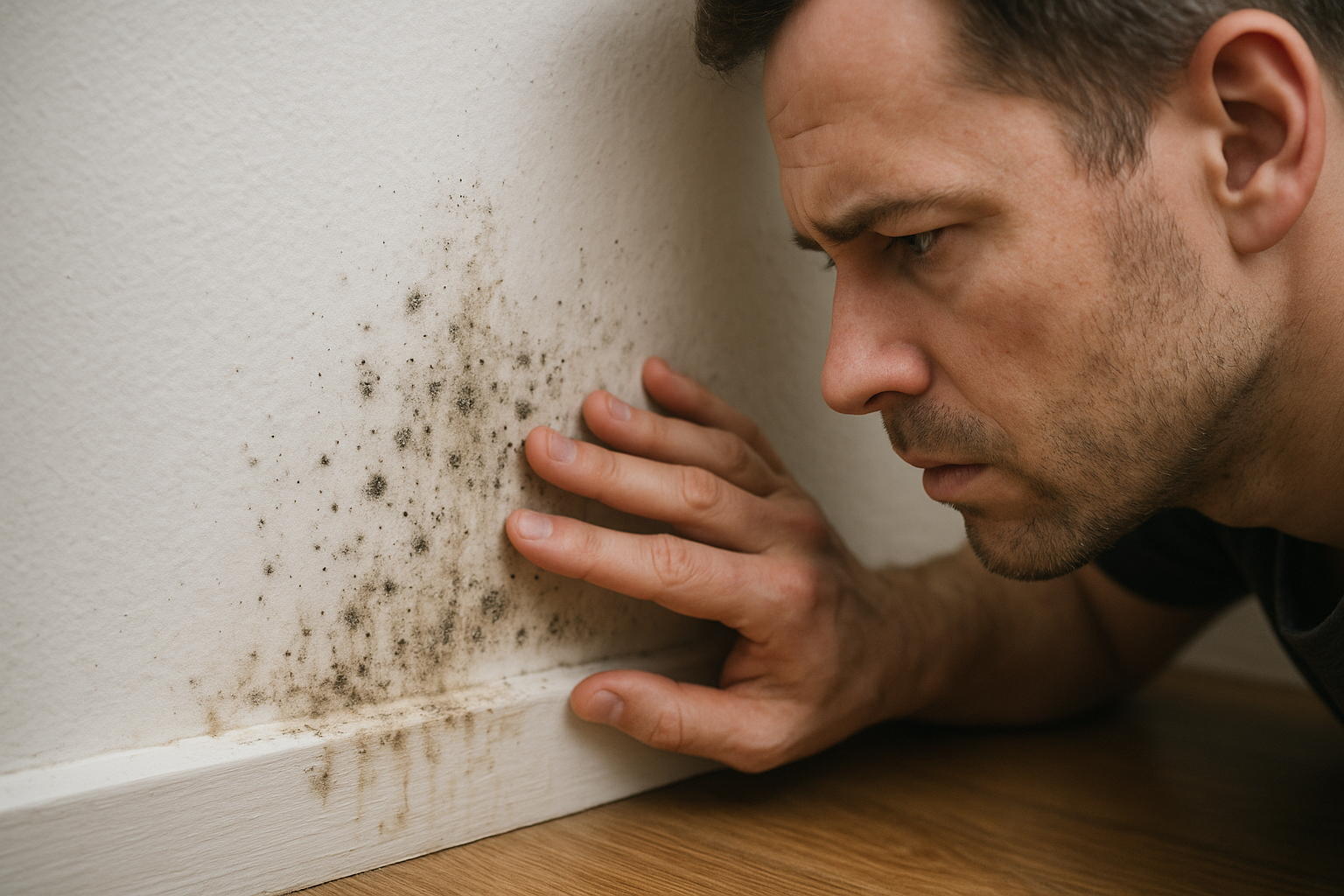
Mold rarely makes a dramatic entrance. More often it whispers — a faint smell here, a stain there, a symptom you blame on something else. Catching those early signals is the difference between a quick, affordable fix and a major remediation. Here are twelve signs a Grand Rapids home may have a mold problem, starting with the ones people miss most.
1. A persistent musty smell
That earthy, “old basement” odor is mold's calling card. If a room or your whole house smells musty — especially near the bottom of the basement stairs — mold is almost certainly growing somewhere, even if you can't see it. The smell comes from compounds mold releases as it grows, so a strong odor with no visible mold means it's time to look harder.
2. Visible spots or discoloration
Black, green, white, or orange speckling on walls, ceilings, grout, or framing is the obvious sign. Don't assume color tells you the type — only testing does — but any unexplained spotting that grows or returns after cleaning is mold until proven otherwise.
3. Water stains and discoloration
Brown or yellow staining on a ceiling or wall marks where water has been, and where mold may have followed inside the assembly. Even a stain that's dry now points to a past or intermittent leak worth investigating.
4. Condensation on windows, walls, or pipes
Persistent condensation means the air is holding more moisture than your surfaces can handle — common on Grand Rapids windows in winter and basement walls in summer. Where there's chronic condensation, mold tends to follow.
5. Peeling paint, bubbling, or warped surfaces
Paint that bubbles or peels, wallpaper that lifts, or drywall and baseboards that warp all signal moisture in the material behind them — a setup for hidden mold.
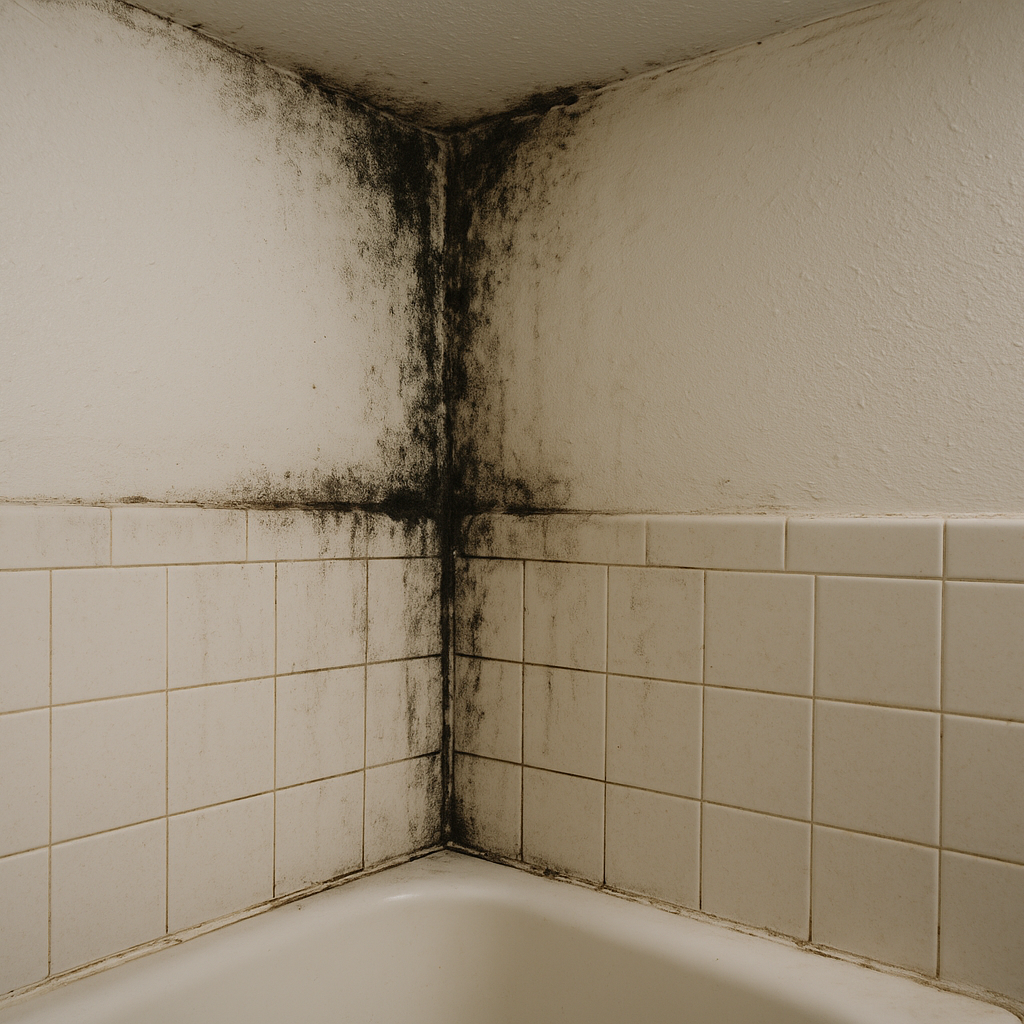
Before: spotting and staining
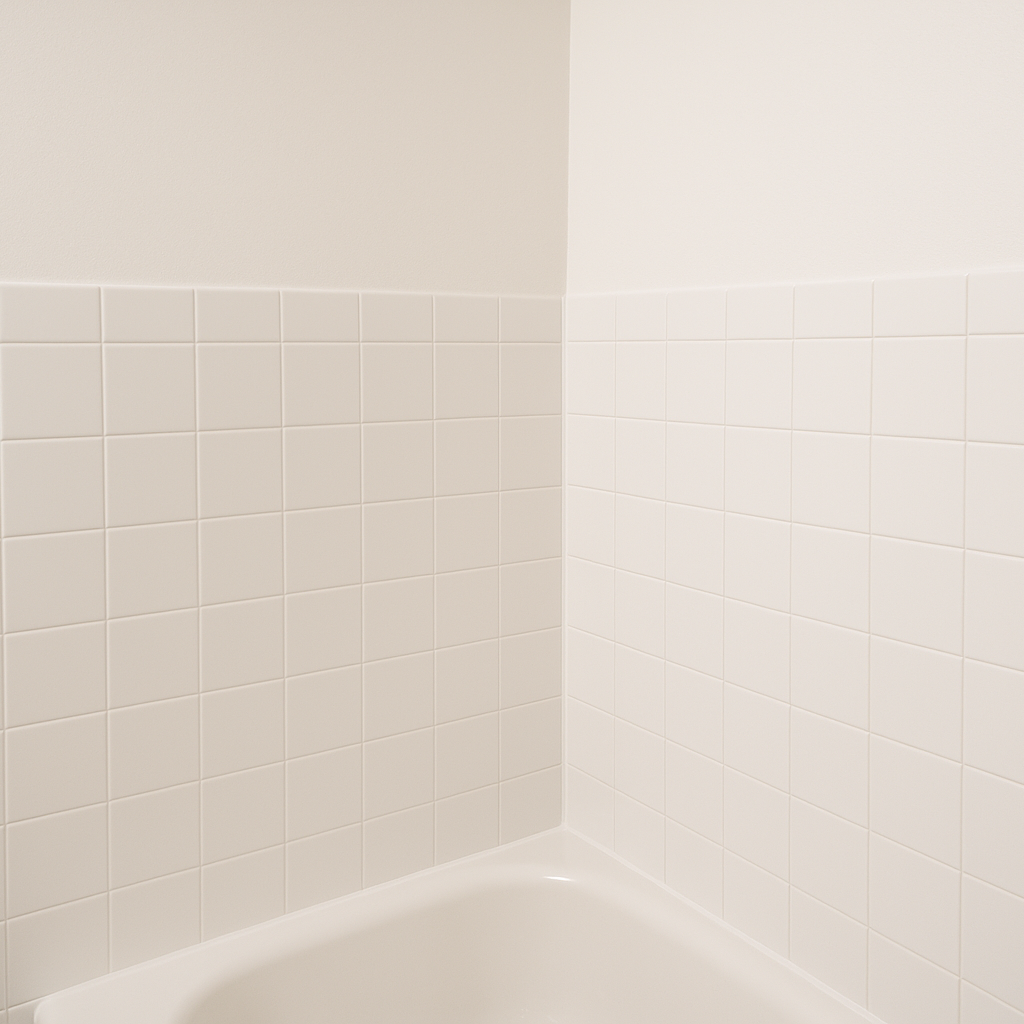
After: remediated and resealed
6. Efflorescence on basement walls
The white, crusty mineral deposit on bare block or concrete isn't mold itself, but it proves water is moving through the wall — which means the conditions for mold are present. Treat efflorescence as a moisture warning.
7. Allergy symptoms that improve when you leave
If your sneezing, congestion, itchy eyes, or scratchy throat ease when you're away from home and return when you come back, your house may be the source. Mold is a common indoor allergen, and this “better away, worse at home” pattern is a classic clue.
8. Worsening asthma or respiratory issues
Mold can trigger asthma and irritate airways. If someone in the home has new or worsening respiratory symptoms with no clear cause, indoor air quality — including mold — is worth ruling out. (We're a referral service, not doctors; see a physician for symptoms.)
9. A history of flooding or leaks
If your basement has flooded, a pipe has burst, or the roof has leaked — even years ago — and the area wasn't professionally dried, assume mold may be present until you've confirmed otherwise. This is especially true for flood-prone Grand Rapids neighborhoods.
10. Dark grout, caulk, or silicone
Black staining in bathroom or kitchen grout and along caulk lines is usually surface mold from chronic humidity. It's often manageable, but recurring growth points to a ventilation or moisture problem behind it.
11. Damp, cool, or “heavy” air in a room
A basement or room that feels noticeably damp, cool, and stuffy — where the air just feels heavy — usually has elevated humidity. A cheap hygrometer reading above 60% confirms conditions mold loves.
12. Rusty nails, fasteners, or HVAC issues
Rust on nail tips poking through attic sheathing, corroded fasteners, or mold-smelling air from HVAC vents all point to hidden moisture — in the attic, the ducts, or the equipment — that can feed mold and spread it through the house.
What to do if you spot the signs
One sign might be nothing; several together, or any that persist, deserve a closer look. You can investigate small, obvious surface mold yourself, but anything hidden, recurring, large, or tied to health symptoms is worth a professional inspection — which also tells you the moisture source so the fix actually lasts. We'll match you with a vetted Grand Rapids company for a free assessment. Call (616) 816-2703 or send the form.
Where to actually look
If the signs point to a hidden problem, here's where mold most often hides in Grand Rapids homes: behind and beneath finished basement walls and flooring; inside the wall cavity under windows that condense in winter; behind bathroom tile and under the flooring around toilets and tubs; in vented crawl spaces on the subfloor and joists; on the underside of attic roof sheathing, especially the north-facing side; around HVAC equipment, condensate lines, and ductwork; and behind large furniture or stored boxes against cool exterior or basement walls. A flashlight and a willingness to look behind and beneath things turns up more than most people expect.
Should you test or trust your senses?
Your nose and eyes are good first detectors, but they can't tell you the type of mold, how much is airborne, or whether a past problem is truly resolved. That's where professional testing comes in — an air sample compared to an outdoor baseline, or a surface sample sent to an accredited lab. You don't need testing for every spot of obvious surface mildew, but it's the right call when the problem is hidden, when health is a concern, when you're buying or selling, or when you need to prove to a landlord, buyer, or insurer that the air is clean.