
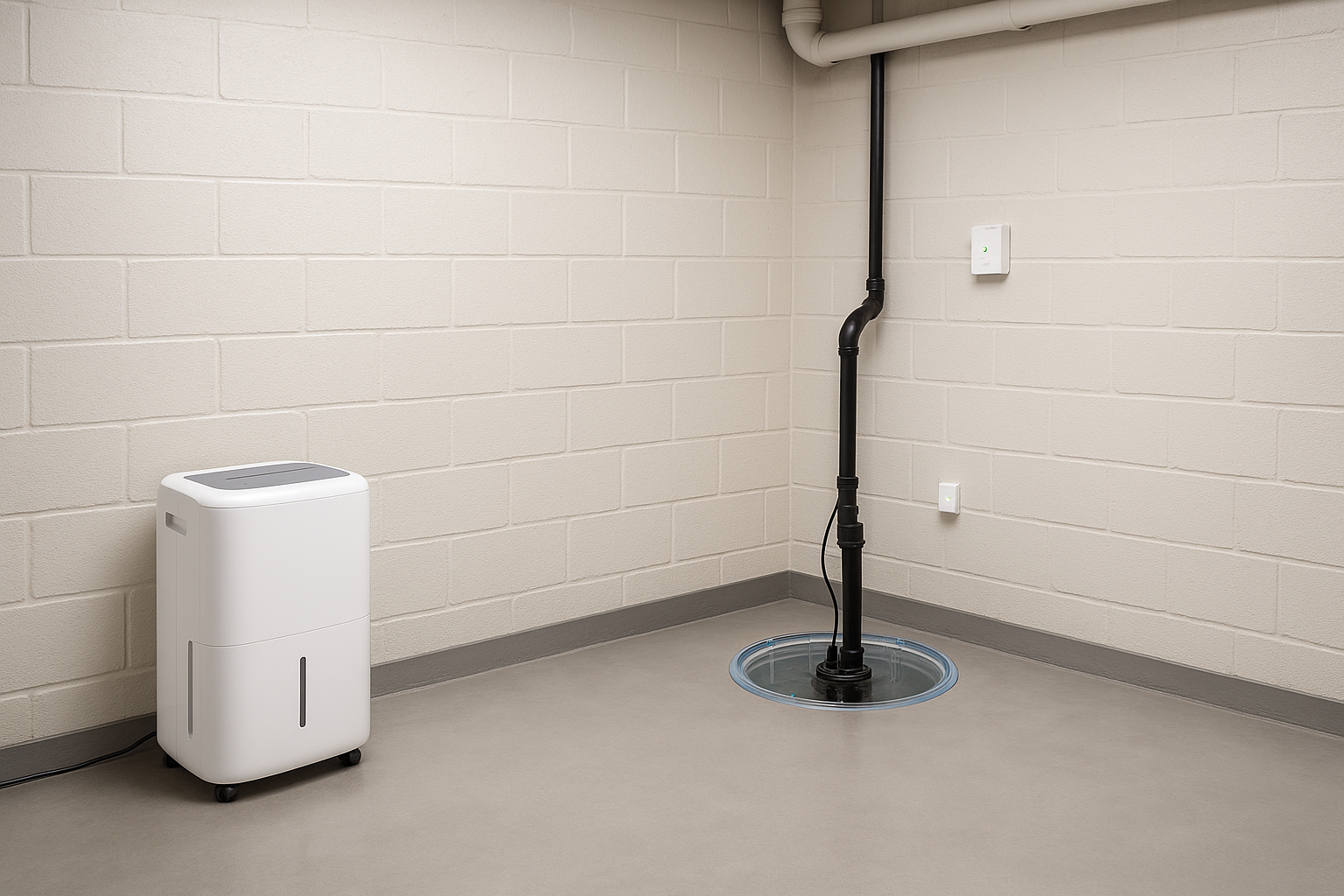
Basement and crawl space mold is one of the most preventable problems a Grand Rapids homeowner faces — and one of the most expensive to ignore. Because our climate pushes moisture at below-grade spaces all year, prevention here is less a one-time project and more a handful of habits and a few smart investments. Here's the playbook the pros recommend, organized from the cheapest fixes to the bigger ones.
Start outside: keep water away from the foundation
Most basement moisture starts as water that should have drained away from your house but didn't. Before spending a dollar inside, handle the outside:
- Clean and extend your downspouts. They should carry roof water at least six feet from the foundation, not dump it against the wall. This single fix solves a surprising number of damp basements.
- Fix your grading. The ground should slope away from the house for the first several feet. Settled soil that tilts back toward the foundation funnels water exactly where you don't want it.
- Keep gutters clear. Overflowing gutters dump concentrated water at the foundation — especially under West Michigan's heavy tree cover.
- Manage snow. Don't pile shoveled snow against the foundation, where it melts straight down along the wall.
Protect against the spring thaw
The thaw is the moment of truth for West Michigan basements. Get ahead of it:
- Test your sump pump before spring. Pour water in the pit and confirm it kicks on and drains. A pump that fails during the thaw is how basements flood.
- Add a battery backup. Spring storms cause power outages, and a sump pump without power during a thaw is useless. A battery (or water-powered) backup is cheap insurance.
- Know your water table. If your pump runs often in spring, you have significant groundwater — a sign to keep the system in top shape and watch humidity closely.
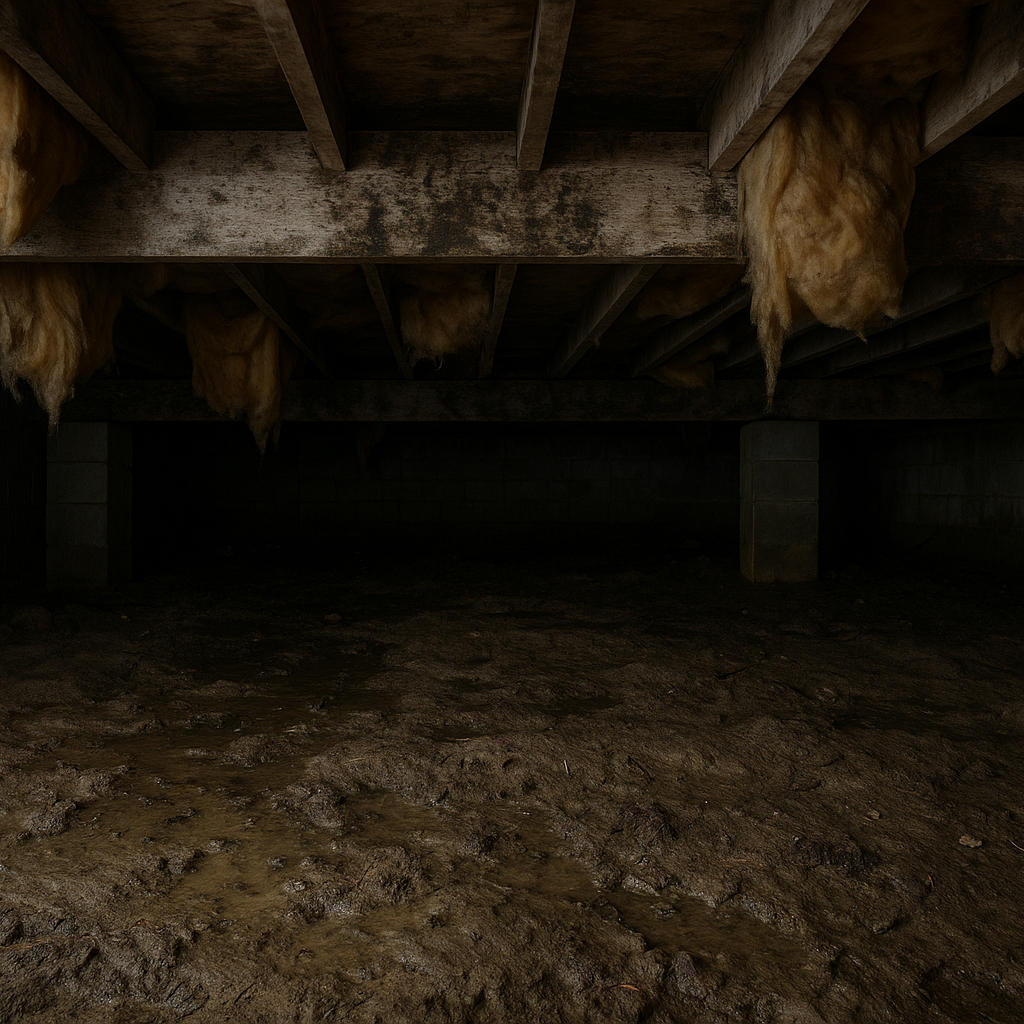
Before: humid, vented crawl space
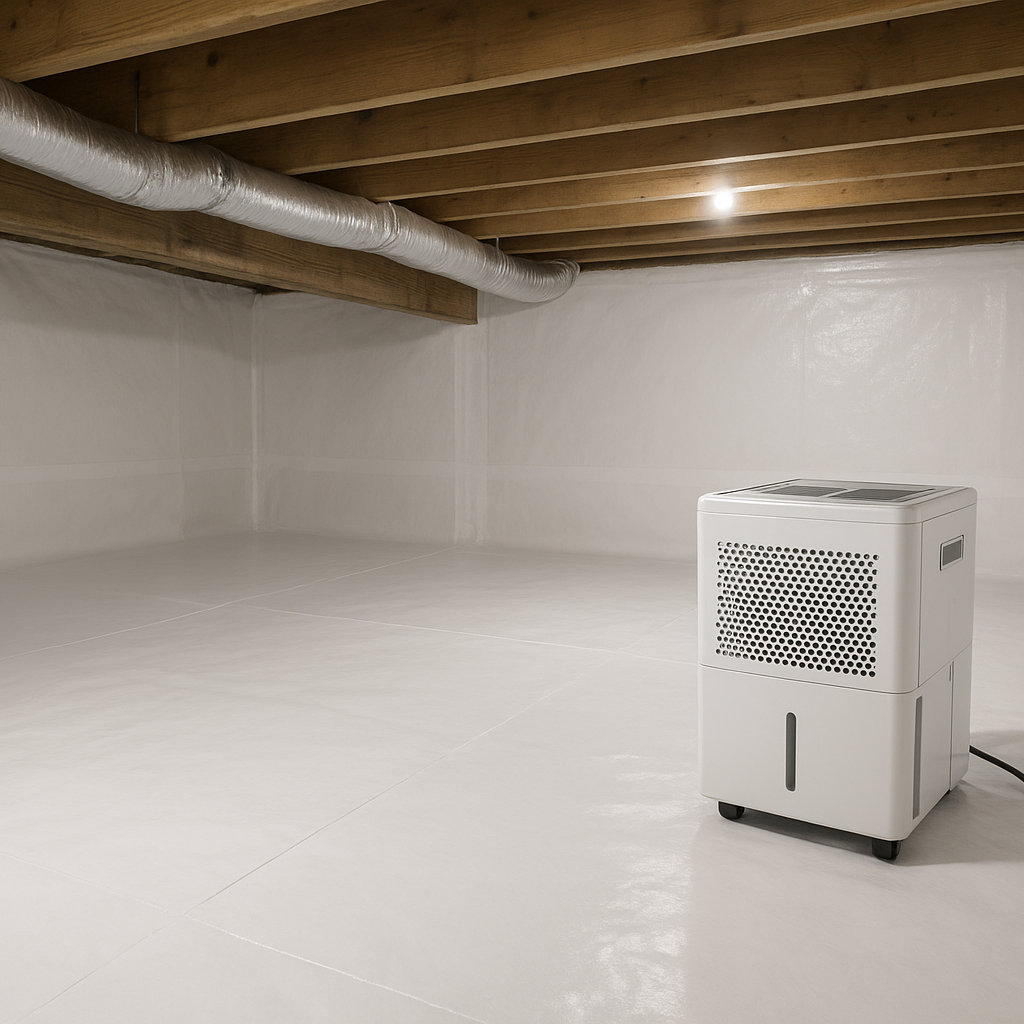
After: encapsulated and humidity-controlled
Control humidity year-round
Even with the water managed, humid summer air will keep a basement damp. Humidity control is the unsung hero of mold prevention:
- Run a dehumidifier sized for your basement, set to hold relative humidity around 50%. Models that drain to the sump or a floor drain don't need emptying.
- Get a hygrometer. A $15 humidity gauge on the stairs tells you when you're drifting into mold territory (above ~60%).
- Don't over-ventilate in summer. Opening basement windows on a humid day brings in moisture that condenses on cool surfaces — the opposite of what you want.
Seal and encapsulate crawl spaces
Vented crawl spaces are a chronic mold source in this climate. The lasting fix is encapsulation: a heavy vapor barrier over the floor and walls, sealed vents, and a dedicated dehumidifier or conditioned-air supply. It turns a damp, spore-producing space into a dry, sealed one — and usually makes the floors above warmer in winter as a bonus.
Choose mold-resistant materials when you finish
If you're finishing or refinishing a basement, build it to survive this climate. Leave a capillary break between framing and the foundation, use mold-resistant drywall and rigid foam rather than paper-faced board and fiberglass against cold walls, avoid carpet directly on a cold slab, and keep the bottom of finished walls off the concrete. These choices cost little extra and prevent the all-too-common scenario of mold growing behind a beautiful finished basement.
Watch for early warning signs
Catch problems while they're cheap. A musty smell, white efflorescence on block, condensation on walls or pipes, peeling paint, or a humidity gauge creeping past 60% are all early signals. Our guide to the signs of mold in a Grand Rapids home covers what to look for. If you spot them, address the moisture before mold gets established — or get a quick inspection to be sure.
When prevention isn't enough
If mold has already taken hold, prevention steps alone won't remove it — but they're exactly what keeps it gone after remediation. A local pro can both remediate the existing problem and help you put the right moisture controls in place. We'll match you with a vetted Grand Rapids company for a free assessment whenever you're ready.
A simple seasonal checklist
Prevention is easiest as a routine. Here's a West Michigan rhythm worth keeping:
- Late winter: Test the sump pump and its backup before the thaw. Clear snow away from the foundation. Check that downspouts are still extended and not buried.
- Spring: Watch the basement during heavy melt and rain. Confirm the pump is keeping up. Look for any new seepage or damp spots at the base of walls.
- Summer: Run the dehumidifier and check the hygrometer weekly. Keep basement windows closed on humid days. Watch for condensation.
- Fall: Clean gutters before the leaves and snow arrive. Re-check grading. Service the dehumidifier and sump system.
Fifteen minutes a season prevents most of the basement mold problems we're called about — and gives you an early warning if something's changing.
What prevention can't fix
Prevention keeps a dry basement dry, but it won't cure an underlying defect. A foundation with significant cracking, a chronically high water table with no drainage system, a buried downspout system that's collapsed, or grading that can't be corrected without excavation may need a waterproofing contractor, not just maintenance. If your basement stays damp despite doing everything right, that's the signal to have a professional diagnose the structural source rather than fighting humidity forever.