
How West Michigan winters grow attic mold
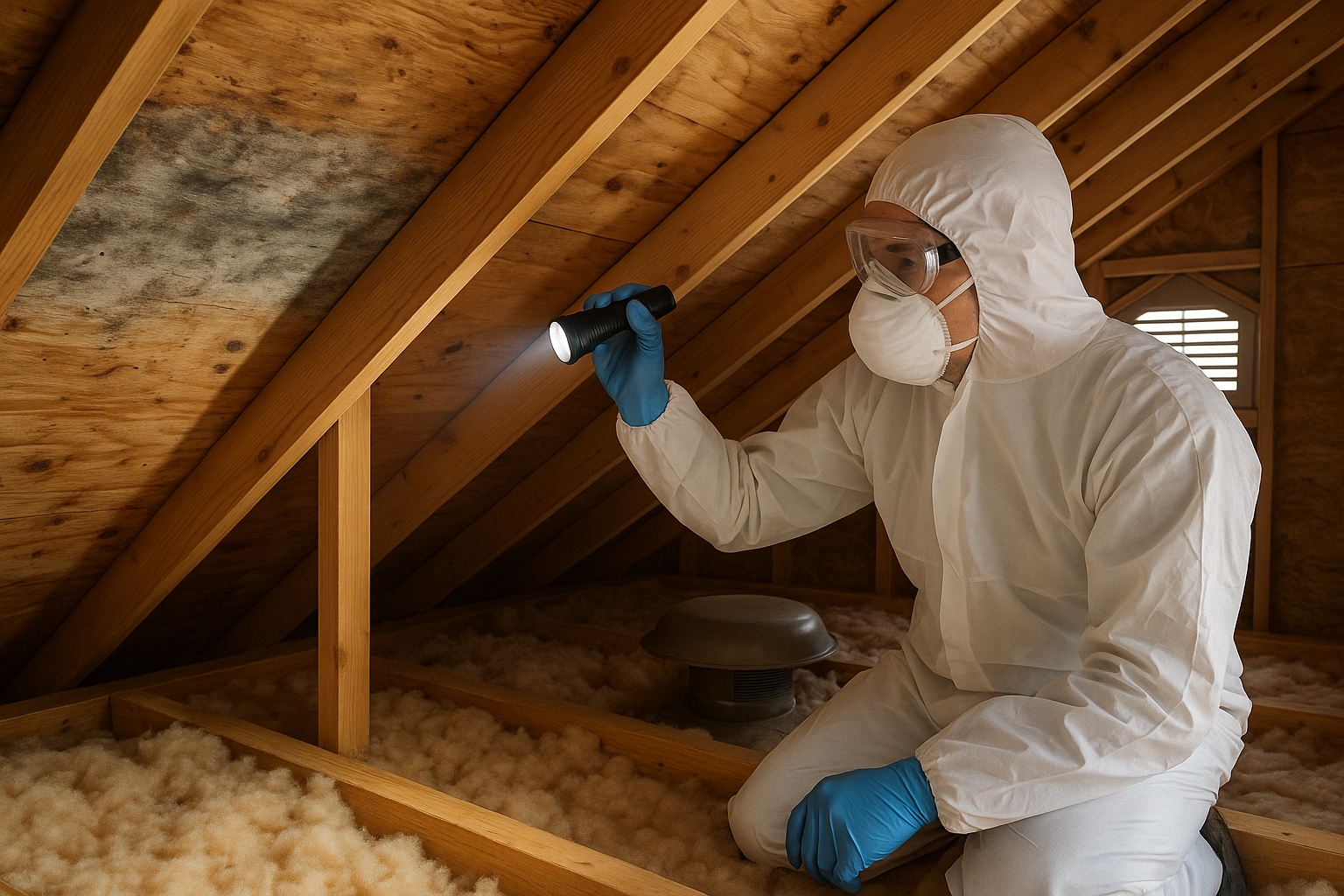
Attic mold here is mostly a cold-weather condensation story. When warm, moist air from the living space leaks up into a cold attic — through can lights, the attic hatch, gaps around plumbing stacks, and especially bath and kitchen fans that vent into the attic instead of outside — it hits the freezing underside of the roof sheathing and condenses. In a long Grand Rapids winter that moisture frosts up, melts during a thaw, refreezes, and keeps the plywood damp for weeks. The result is the dark gray or black staining you see on the north-facing roof deck and the nails poking through. It's almost always worse on the north slope, which never gets enough sun to dry out.
Ice dams add a second path. When attic heat melts the snowpack on the roof, water runs down to the cold eaves, refreezes into a ridge of ice, and backs up under the shingles — soaking the sheathing, the top of exterior walls, and sometimes the insulation. That trapped water is a direct line to mold, and ice dams are one of the most common winter calls in this region.
Why cleaning alone won't fix it
You can scrub, sand, or soda-blast the stains off the sheathing, and a good crew often does — but if the airflow that caused the condensation isn't corrected, the mold returns the next winter. That's the single most important thing to understand about attic mold: it's a ventilation and air-sealing problem first. Remediation that doesn't include sealing the air leaks, venting the fans to the exterior, and restoring proper intake-and-exhaust ventilation is a temporary cosmetic fix.
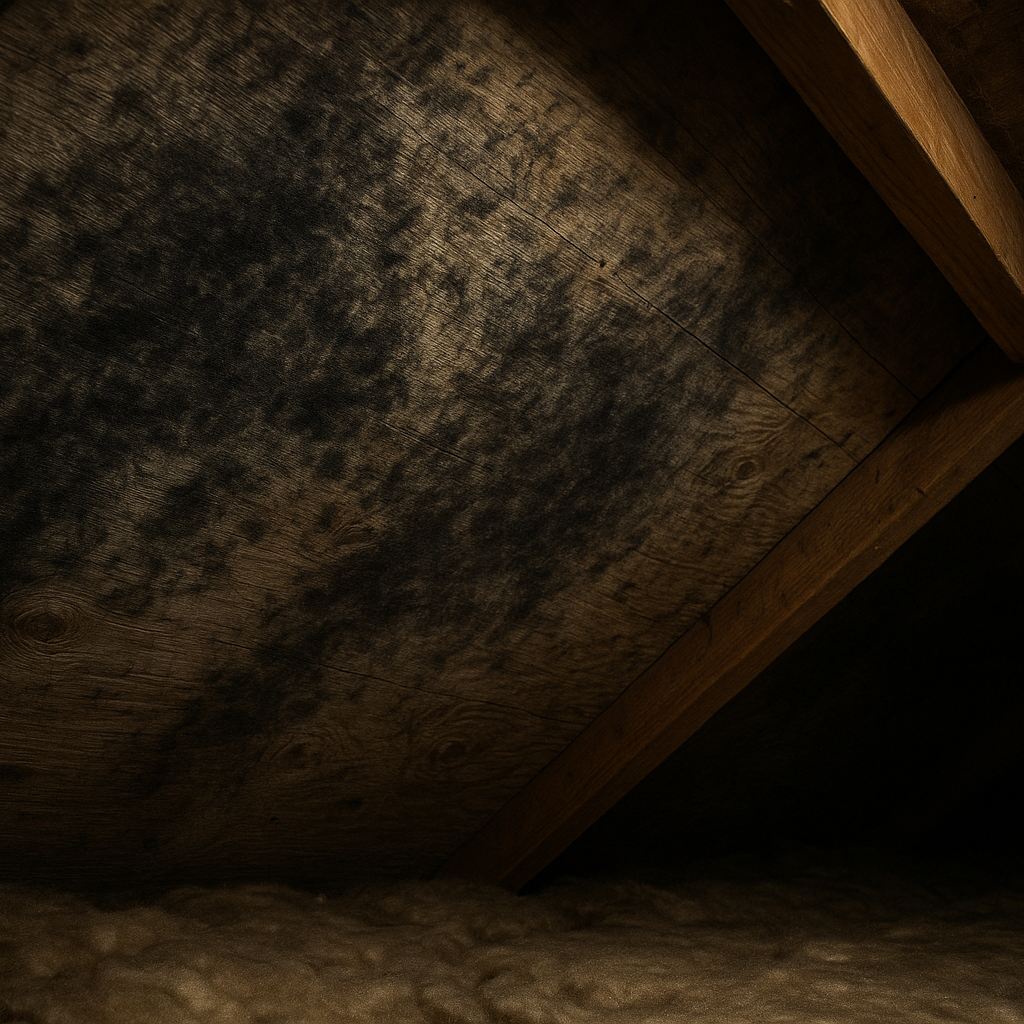
Condensation mold on the north-slope roof deck.
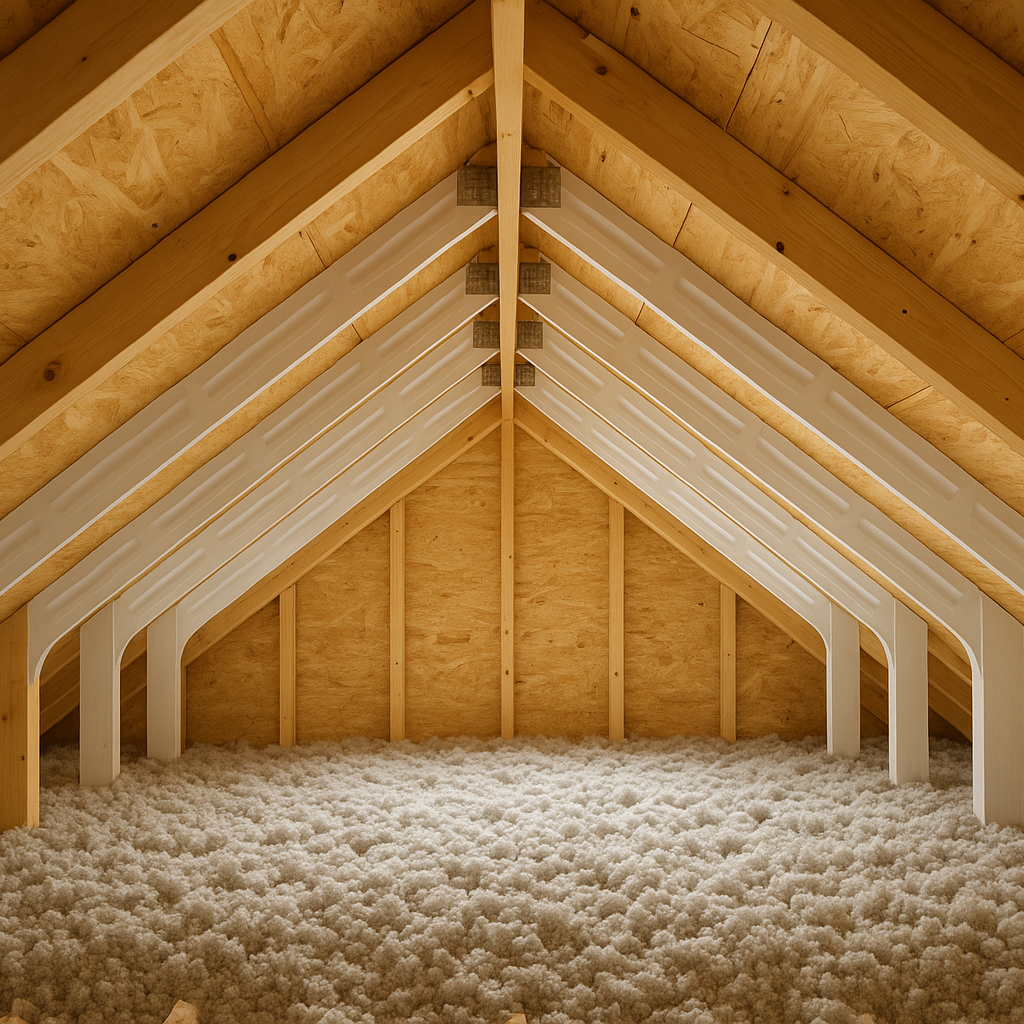
Sheathing treated and the airflow corrected.
The attic remediation process
- Diagnose the moisture path. Locate the air leaks, mis-vented fans, ice-dam damage, and ventilation shortfalls feeding the condensation.
- Protect and contain. Cover the insulation and stored items; protect the access point so spores don't drift into the house.
- Treat the sheathing. HEPA-vacuum, then remove the staining and growth by approved methods (media blasting or treatment) and apply an antimicrobial; replace any sheathing that's structurally compromised.
- Air-seal the ceiling plane. Seal can lights, the hatch, top plates, and penetrations so warm wet air stops reaching the attic.
- Vent fans outside. Run bath and kitchen exhaust through dedicated ducts to roof or wall caps — never into the attic.
- Restore ventilation. Balance soffit intake and ridge exhaust so the attic stays cold and dry, and address ice-dam causes (insulation, air-sealing) at the eaves.
The bath fan is the usual culprit. A surprising number of attic-mold jobs trace back to one exhaust fan blowing humid shower air straight into the attic. Re-routing it to the outside is cheap and often the most important single fix.
What attic mold removal costs in Grand Rapids
A modest attic with surface staining, treatment, fan re-venting, and air-sealing often lands in the mid four figures. Larger attics, heavy growth requiring media blasting, sheathing replacement, ice-dam repairs, or new insulation push the number higher. Because the lasting fix bundles remediation with ventilation and air-sealing, it's worth getting a scope that itemizes both. Start with our estimator and the cost guide.
Catch it before next winter
Attic mold is easy to ignore because nobody's up there — until a roofer or home inspector spots it during a sale. If you've had ice dams, see staining on the roof deck, or notice frost on the nails in winter, it's worth a look now. Our guide on ice dams, snowmelt, and attic mold goes deeper on prevention. Get an inspection to confirm the cause, then tell us what's going on and we'll connect you with a licensed local pro for a free quote.
The Grand Rapids attic moisture cycle
Attic mold in West Michigan is almost always a ventilation-and-air-leak story, not a roof leak. Through our long heating season, warm, moist air from the living space leaks up through ceiling penetrations — can lights, the attic hatch, bath fans, top plates — and hits the cold underside of the roof sheathing. There it condenses, frosts, and on the next warm day drips back onto the wood, feeding the dark mold you see along the north-facing rafters and at the eaves. Ice dams make it worse, backing meltwater up under the shingles and into the same cold, poorly ventilated corners.
Fixing the cause, not just the stain
That's why a real attic remediation starts with the air and the airflow. The crew air-seals the ceiling penetrations that let warm, humid air into the attic, makes sure bath and kitchen fans actually vent outdoors rather than into the attic, tops up insulation to keep the ceiling plane warm, and restores a clear path from soffit vents to ridge so the attic stays cold and dry. Only then do they treat the sheathing — HEPA-vacuuming, then sanding, soda-blasting, or applying an appropriate antimicrobial coating to the affected wood. Skip the air and ventilation work and the stains simply return the next winter.
Catching it before it spreads
Attics are out of sight, so problems grow for years before anyone looks. It's worth a flashlight check each spring: dark streaking on the underside of the roof deck, frost or water stains near the eaves, matted or damp insulation, and rusty nail tips poking through the sheathing all point to a moisture problem brewing overhead. Caught early, attic mold is a contained, affordable fix; left alone, it can compromise the sheathing and the insulation across the whole roof.