
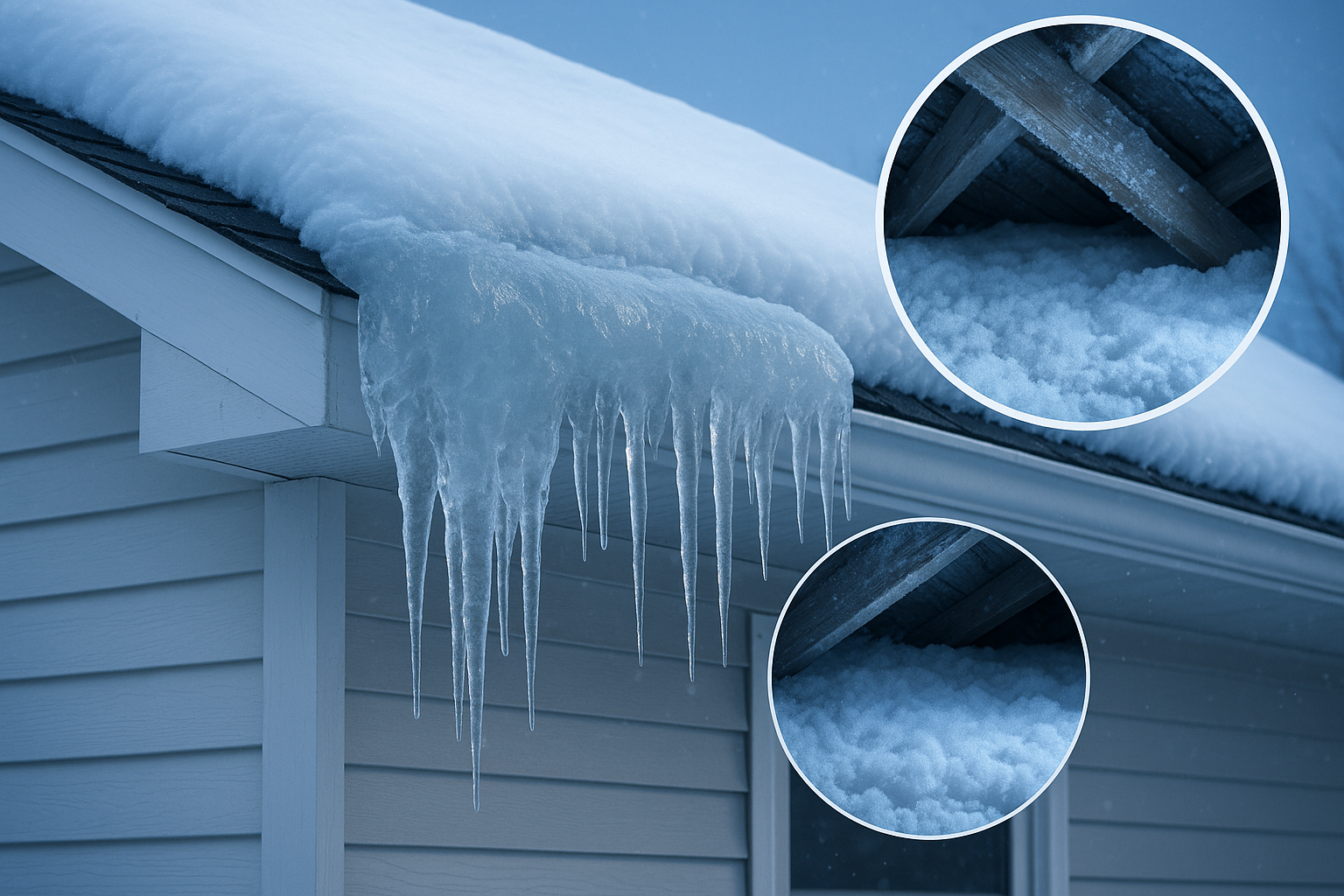
Most homeowners associate mold with basements and bathrooms, but in West Michigan some of the most common — and most overlooked — mold grows overhead, in the attic, during winter. Two cold-weather mechanisms drive it: attic condensation and ice dams. Both come down to warm, moist air meeting cold surfaces, and both are very preventable once you understand them.
How attic condensation feeds mold
Through our long heating season, the air inside your home is warm and carries moisture from cooking, showering, laundry, and simply breathing. That warm, humid air is lighter than the cold air outside, so it rises and leaks up into the attic through every gap it can find: around can lights, the attic hatch, plumbing and wiring penetrations, bath fans, and the top plates of interior walls. When it reaches the cold underside of the roof sheathing, the moisture condenses — and in deep cold, it frosts. On the next warm day, that frost melts and drips back onto the wood. Repeat this cycle through a Michigan winter and you get the dark mold staining we routinely find along the rafters and sheathing, especially on the colder north-facing side of the roof.
How ice dams add water
Ice dams are the visible cousin of the same problem. When heat escaping into the attic warms the roof deck, snow on the upper roof melts, runs down to the cold eaves and overhangs, and refreezes into a ridge of ice. That dam traps the next round of meltwater behind it, and the standing water backs up under the shingles — where it can seep into the roof deck, the attic insulation, and the walls below. Beyond the dramatic icicles, the real damage is the water finding its way into the structure, soaking materials that then grow mold. West Michigan's freeze-thaw cycles make ice dams a near-annual event for poorly sealed, poorly ventilated homes.
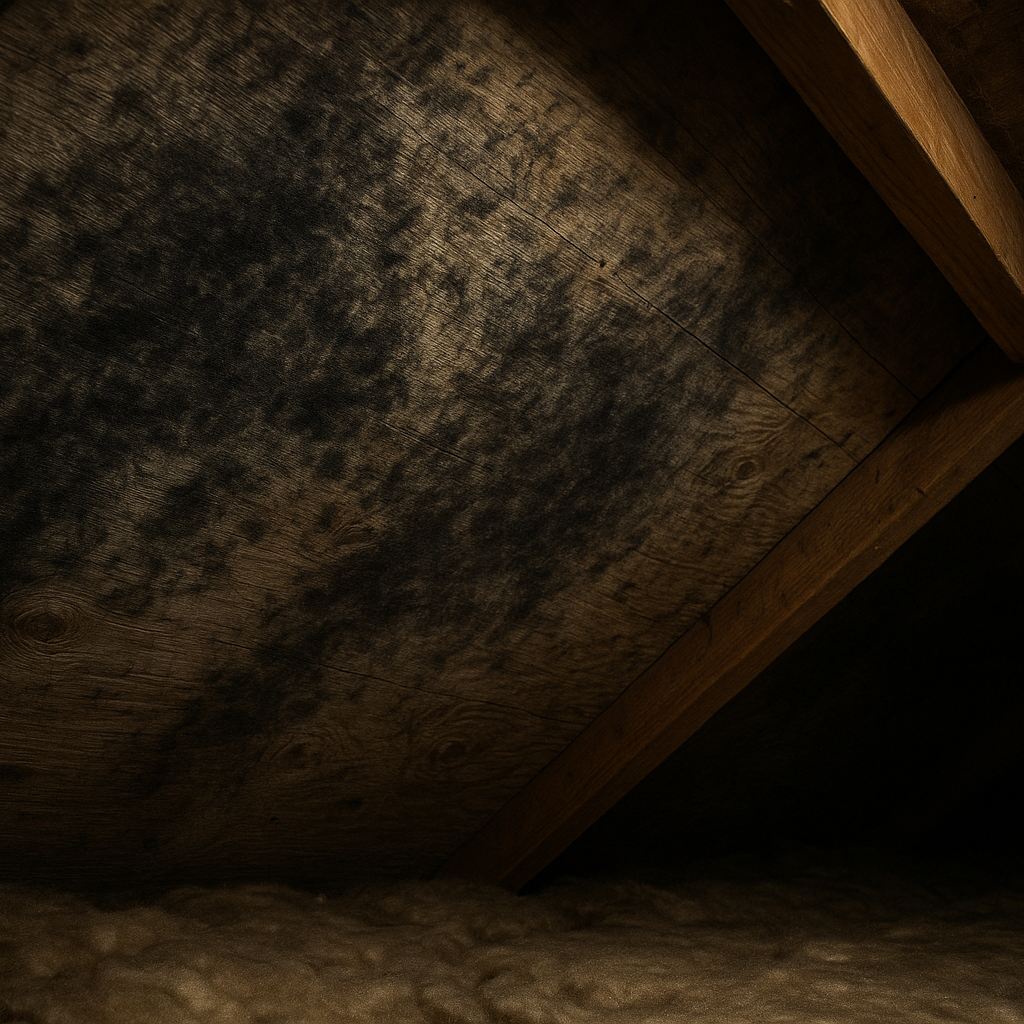
Before: condensation mold on the roof deck
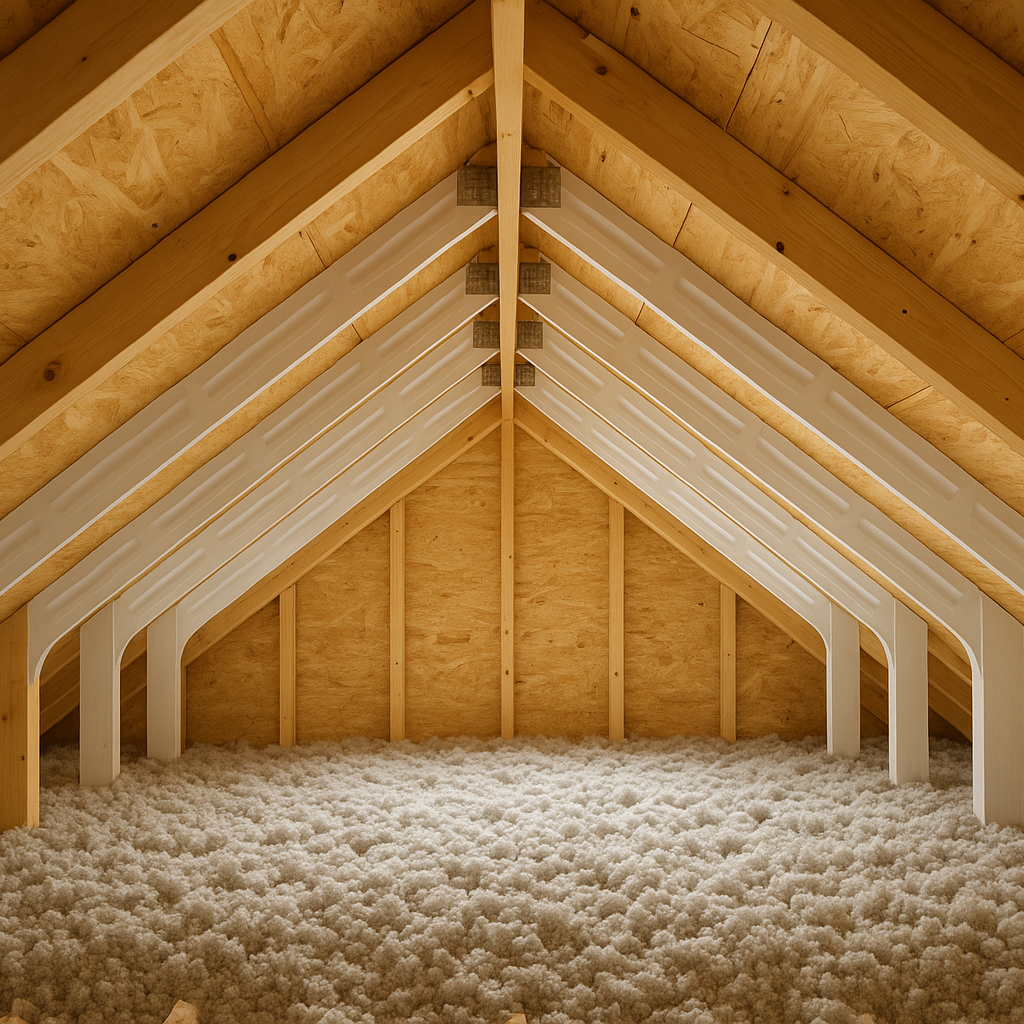
After: treated, with air sealing and ventilation corrected
Why both share one root cause
Attic condensation and ice dams are really two symptoms of the same disease: warm, moist indoor air and heat leaking into a cold attic that can't shed it. That's good news, because it means one set of fixes addresses both.
The three-part fix: seal, insulate, ventilate
Lasting prevention rests on three steps, in order:
- Air-seal the ceiling plane. Find and seal the gaps where warm, moist air leaks into the attic — around can lights, the hatch, top plates, and penetrations. This is the single most important step and stops moisture at the source.
- Insulate well and evenly. Proper, consistent insulation keeps the attic floor warm and the attic itself cold, reducing both condensation and the roof-warming that drives ice dams. Watch for thin or compressed spots.
- Ventilate the attic. A clear path from soffit (intake) vents to ridge (exhaust) vents keeps the attic cold and dry by flushing out any moisture that does get in. Make sure insulation isn't blocking the soffit vents.
Done together, these keep the attic cold and dry all winter — no condensation, no ice dams, no mold.
Don't vent bath fans into the attic
One specific mistake causes an outsized share of attic mold: bathroom and kitchen exhaust fans that dump moist air into the attic instead of outside. A single shower's worth of steam, delivered straight to cold sheathing every day, will grow mold fast. Confirm every exhaust fan ducts all the way to a roof or wall cap outdoors, not into the attic or soffit.
Already have attic mold?
If you find dark staining on the sheathing, frost or water near the eaves, damp or matted insulation, or rusty nail tips, you likely have an active attic moisture problem. Remediation treats the wood — HEPA vacuuming, then sanding, blasting, or an appropriate antimicrobial coating — but it only lasts if the air sealing and ventilation are corrected at the same time. Our attic mold removal page covers the process. We'll match you with a Grand Rapids company that fixes the cause, not just the stain. Call (616) 816-2703.