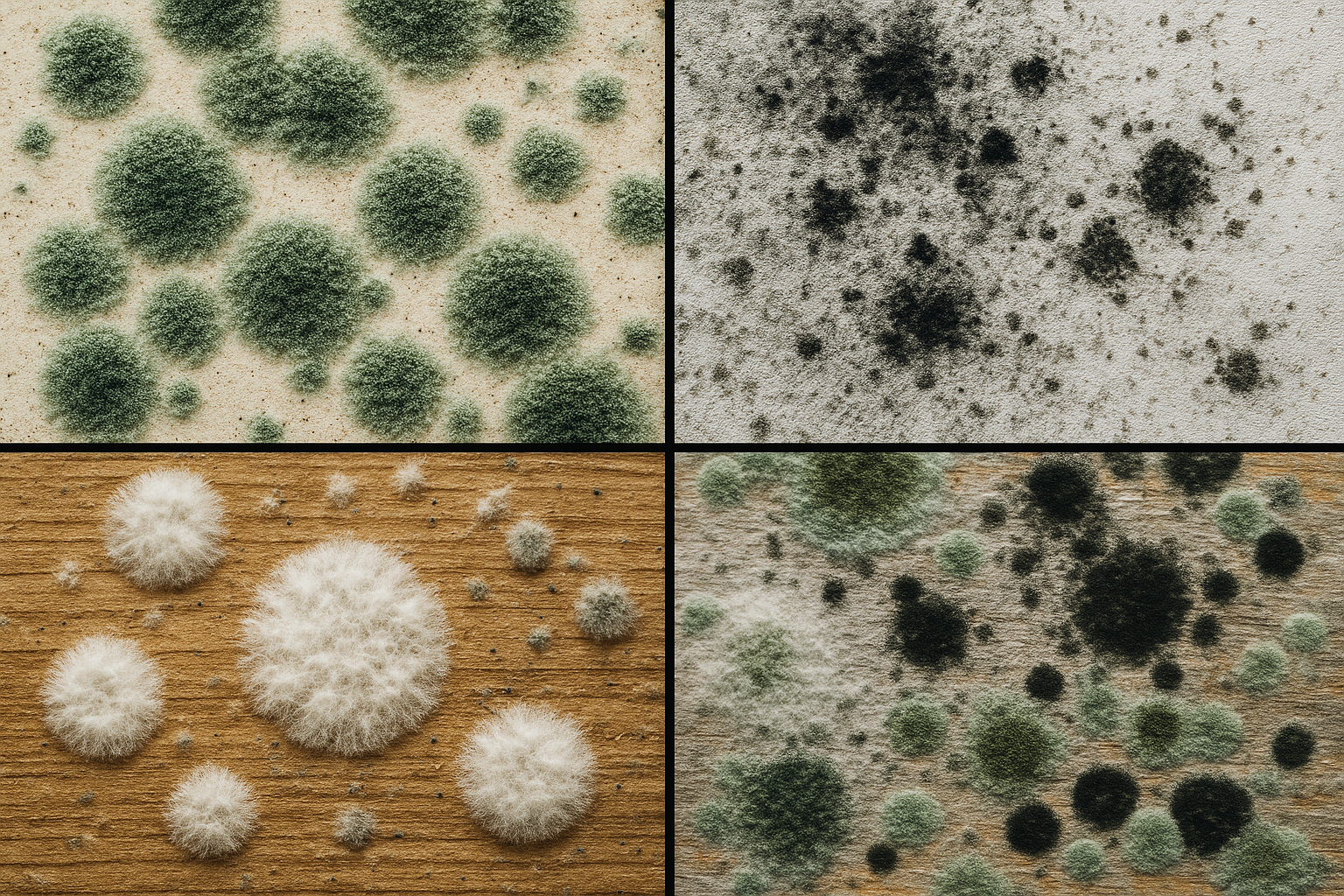
When people find mold, they want to know what it is — and especially whether it's the “toxic” kind. Here's the practical truth up front: you can't reliably identify mold by color or appearance, and only lab testing names a species with confidence. That said, knowing the common types found in West Michigan homes — where they grow and which warrant extra caution — helps you understand what you're looking at and what questions to ask.
Stachybotrys (“black mold”)
The famous one. Stachybotrys chartarum is a greenish-black, often slimy mold that grows on constantly wet, cellulose-rich materials — soaked drywall, paper, and wood. It's the species most associated with the “toxic mold” label because it can produce mycotoxins, and it's a real reason to use proper containment during removal. But remember: plenty of harmless molds also look black, so a dark patch isn't automatically Stachybotrys. Where you find it, you've almost always found a serious, ongoing moisture problem — the mold is the symptom.
Aspergillus
One of the most common indoor molds worldwide, Aspergillus comes in many species and colors — green, grey, yellow, white. It shows up on walls, insulation, HVAC systems, and damp household surfaces. Most people tolerate it, but some species can cause allergic reactions or, in people with weakened immune systems, more serious infections. It's a frequent finding in the damp basements and crawl spaces common to Grand Rapids homes.
Penicillium
Often blue or blue-green with a fuzzy texture, Penicillium loves water-damaged materials — carpet, wallpaper, insulation, and furnishings that got wet and stayed damp. It spreads quickly and is a common cause of the musty smell in basements that have had moisture problems. It's a frequent allergen.
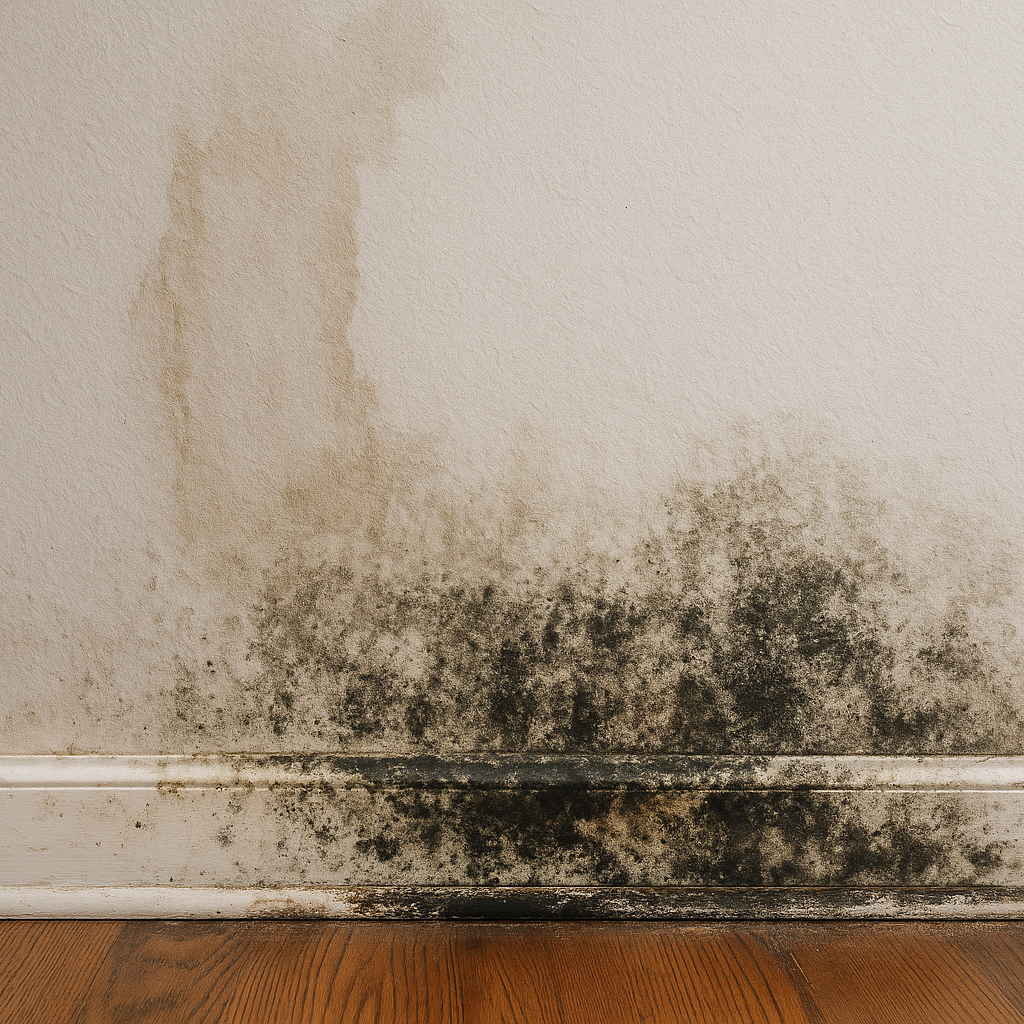
Mold on water-damaged material

Removed and restored
Cladosporium
A very common mold that can grow in both warm and cool conditions, Cladosporium appears olive-green, brown, or black and is often found on fabrics, carpets, wood, and around damp window frames — including the condensation-prone windows of West Michigan winters. It's a common allergen but generally less concerning than Stachybotrys.
Alternaria
Alternaria is a dark green or brown mold with a velvety texture, commonly found in damp spots like showers, under sinks, and around tubs and windows. It's one of the more common molds in bathrooms and a frequent allergy trigger, which is why bathroom ventilation matters so much.
Aureobasidium and others
You may also encounter Aureobasidium (pink, brown, or black, often on damp wood, caulk, and around windows), and various other genera. The full list is long, but the common thread is the same everywhere: they all need moisture, and they all colonize materials that stay damp.
Why the species matters less than the moisture
Here's the key insight: while some molds warrant more caution than others, the response to any significant indoor mold is fundamentally the same — find and fix the moisture source, remove the mold safely with appropriate containment, and keep the area dry afterward. Identifying the exact species is useful for documentation, for confirming a suspected toxic-mold situation, or for medical context, but you don't need a lab report to know that a moldy, musty area should be cleaned up and the water stopped. The mold is telling you something is too wet.
When testing is worth it
Professional testing — a surface or air sample sent to an accredited lab — earns its cost when you need to confirm a suspected toxic mold, document a problem for a sale or insurance claim, investigate health concerns, or verify that a past remediation worked. For ordinary, visible surface mold with an obvious cause, identification often isn't necessary; safe removal and moisture control are what matter. If you'd like to know what's growing in your Grand Rapids home, we'll match you with a local company that can test and, if needed, remediate. Call (616) 816-2703.